The best Jewish wedding hairstyles are the ones that work with the bedeken veil, survive a chuppah ceremony that is often held outdoors, and stay put when you are lifted up on a chair during the hora. In practice that means low updos, braided buns, well-anchored half-up styles and waves set from the root, always built on a base that can hold your veil and, if it applies to you, a kippah or head covering.
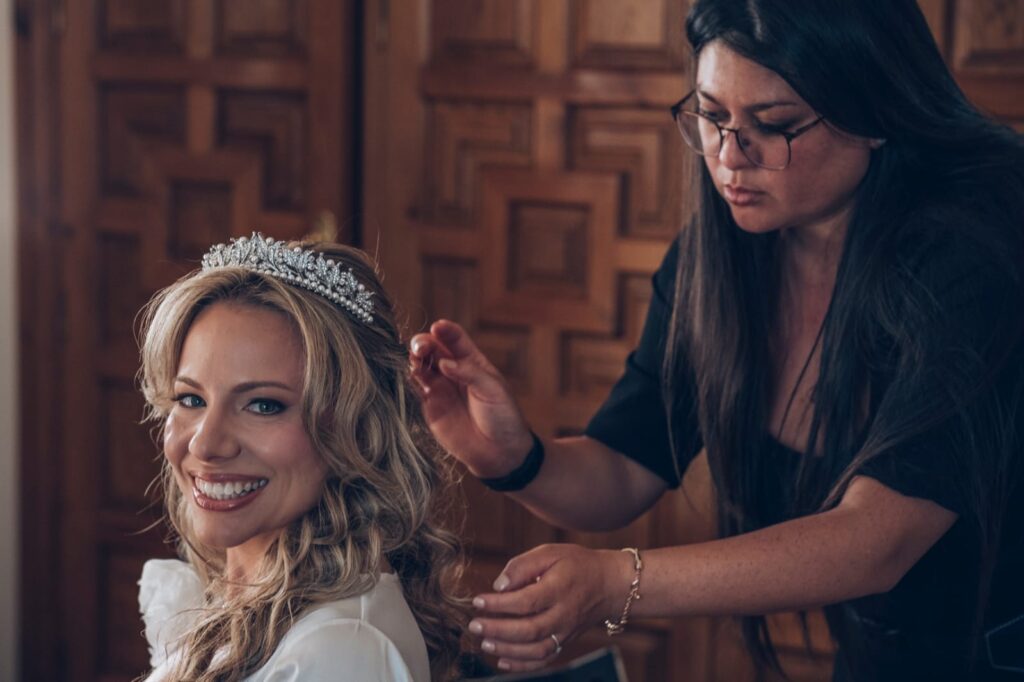
I'm Ceci Sosa, a bridal hairstylist on the Costa del Sol with more than 7 years of experience. I come to your hotel, villa or finca in Marbella, Málaga and the surrounding area, and many of the brides who contact me live outside Spain and come here to get married. In this guide I'll explain how I approach hair for a Jewish wedding: which moments of the day put it to the test, which styles work, and how we plan the morning.
In short:
- Bedeken: the veil needs to come down over your face and go back up without disturbing your hair. The comb sits on a firm base, never on loose hair.
- Outdoor chuppah: with the sun and the coastal breeze, an updo or half-up style beats fully loose hair.
- Hora: crossed pins, structure on the inside and waves set while the hair is still warm.
- Covering your hair: if you are Orthodox or will wear a kippah, we plan it from the very first message.
- An in-person trial with your veil and a photo of your dress, even if you live abroad: we do it once you arrive in Spain.
What makes hair different at a Jewish wedding
There is no single "Jewish hairstyle". An Ashkenazi, Sephardi, Orthodox or Reform wedding can look very different, and every family has its own customs. That's why the first thing I do is ask how your ceremony will run and what matters to you and your family. What almost all of them share is a sequence of moments your hair has to get through, one after the other.
Kabbalat panim and bedeken: the veil over your face
At many weddings the bride receives guests seated before the ceremony (kabbalat panim), and then comes the bedeken: the groom approaches and lowers the veil over your face. That means two things. First, your hair has to be finished and photographed well before the chuppah. Second, the veil needs a front layer, the blusher, and a comb placed where it can take that movement.
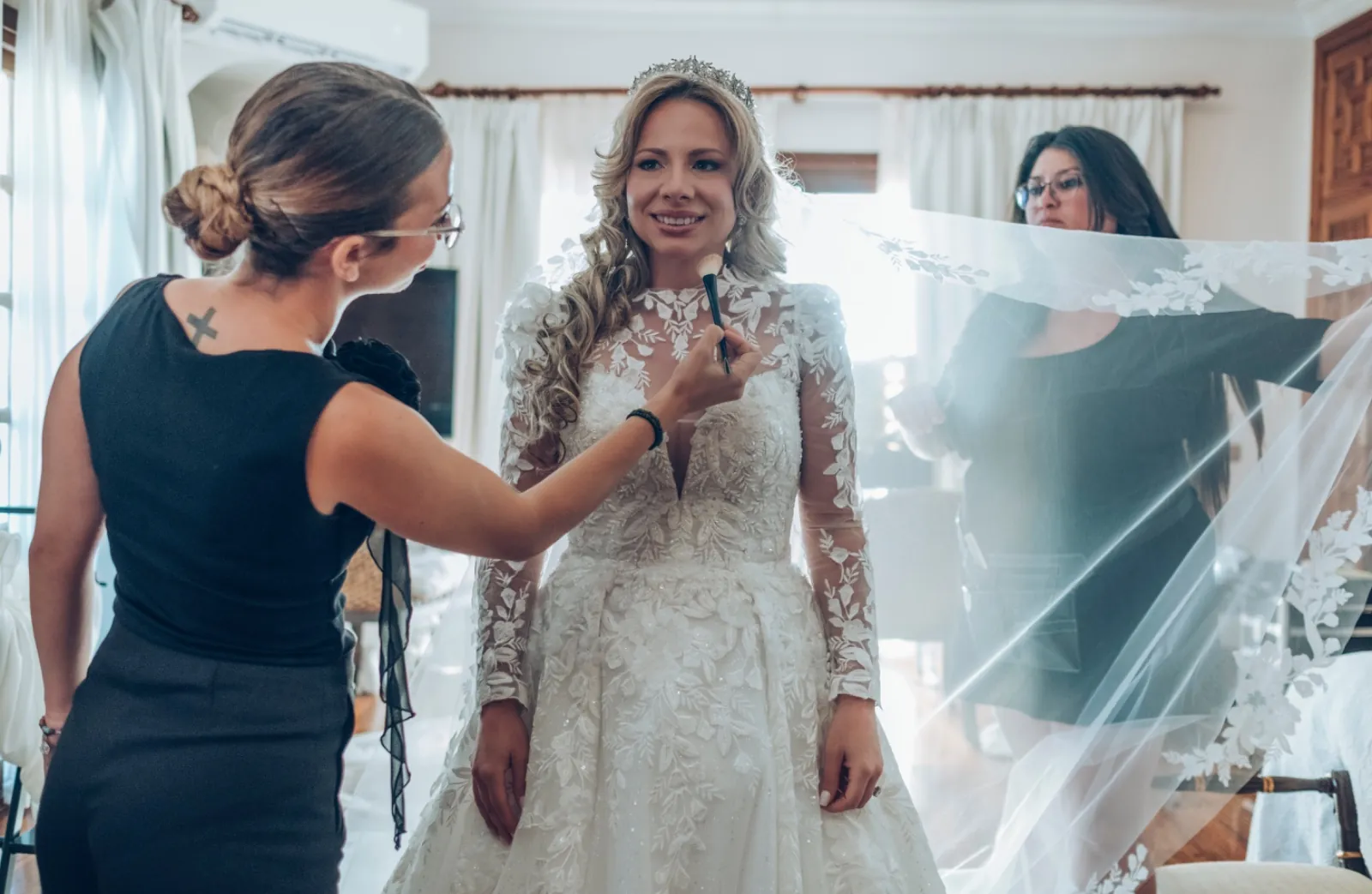
I set the comb onto a base of crossed pins, never just hooked into loose hair, so it doesn't slip when the groom gently draws the fabric down or when the veil is folded back. If you're still deciding on length and style, there's a guide to choosing your veil on the blog.
The chuppah: often under the open sky
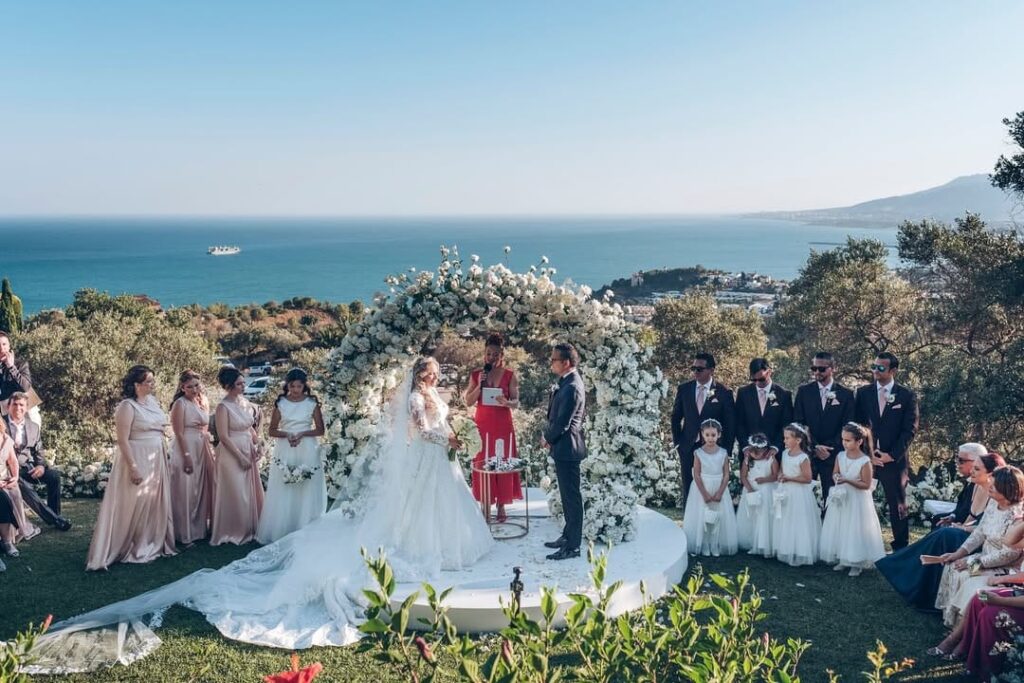
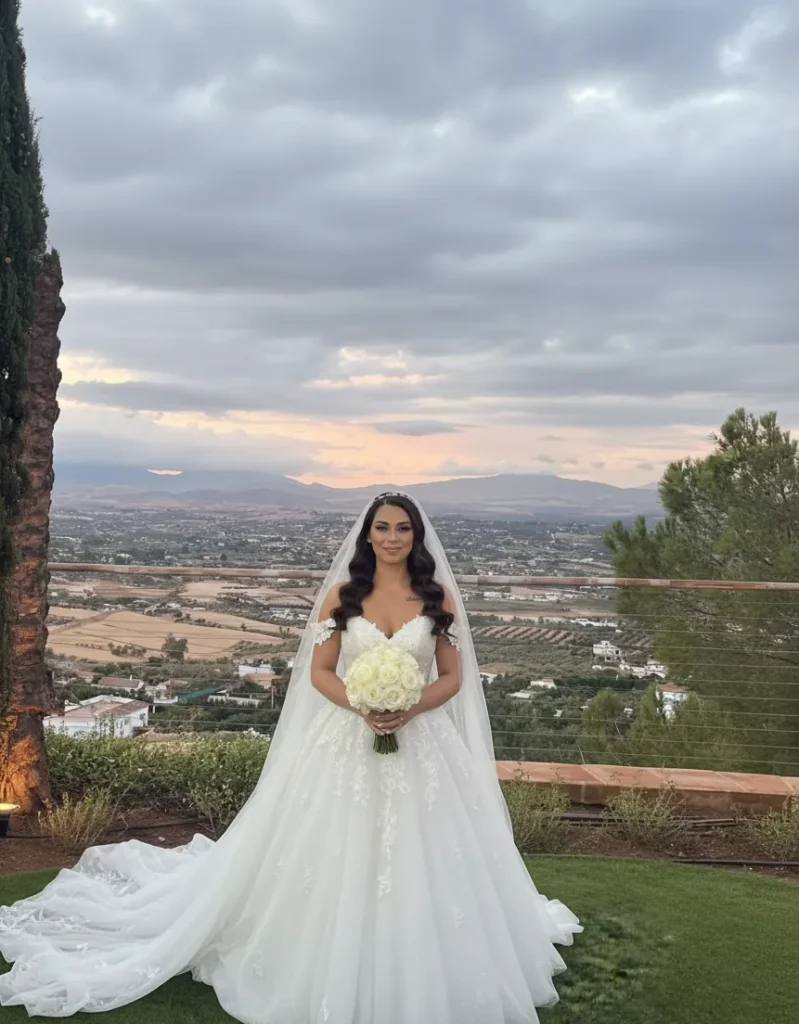
Holding the ceremony under a chuppah in the open air is a long-standing tradition, and on the Costa del Sol that usually means a finca garden or a terrace overlooking the sea. Sun and breeze are in charge here. Loose hair in the wind ends up across your face and tangled in the veil; a low updo or a secure half-up style lets you relax. If you circle the groom, the veil moves with you, so its weight needs to be well distributed.
Yichud, photos and your entrance to the party
After the ceremony many couples spend a few minutes alone (yichud), and then it's time for photos. I stay with you until the photo session is over, so if you'd like to remove the veil, loosen a few strands or switch looks before walking into the party, that's when we do it.
The hora: your hair goes airborne
You're lifted on a chair, brought down, you dance in a circle and get hugged a hundred times. For the hairstyle to survive, I use crossed pins at the base, an internal structure (sometimes a hidden braid that acts as an anchor) and waves set while the hair is still warm. What doesn't cope well with the hora: very high buns with no anchoring, and loose hair with no support at all.
Ceci’s tip
If your wedding includes the hora, tell me at the trial. I change how the style is secured: it can look exactly the same, but inside I build it with the chair and the dancing in mind.
The best Jewish wedding hairstyles and why they work
These are the styles I recommend most for a Jewish wedding, from the most classic to the most relaxed. You'll find more ideas by style in my bridal hairstyles overview.
1. Classic low updo
This is the one that works best with a veil: the comb slots in just above the bun and the veil falls cleanly behind you and over your face for the bedeken. It suits any dress, including high necklines and long sleeves, and it's one of the safest options for the hora. To keep it from looking stiff, I add texture and leave a couple of fine face-framing strands.
2. High bun with side braids
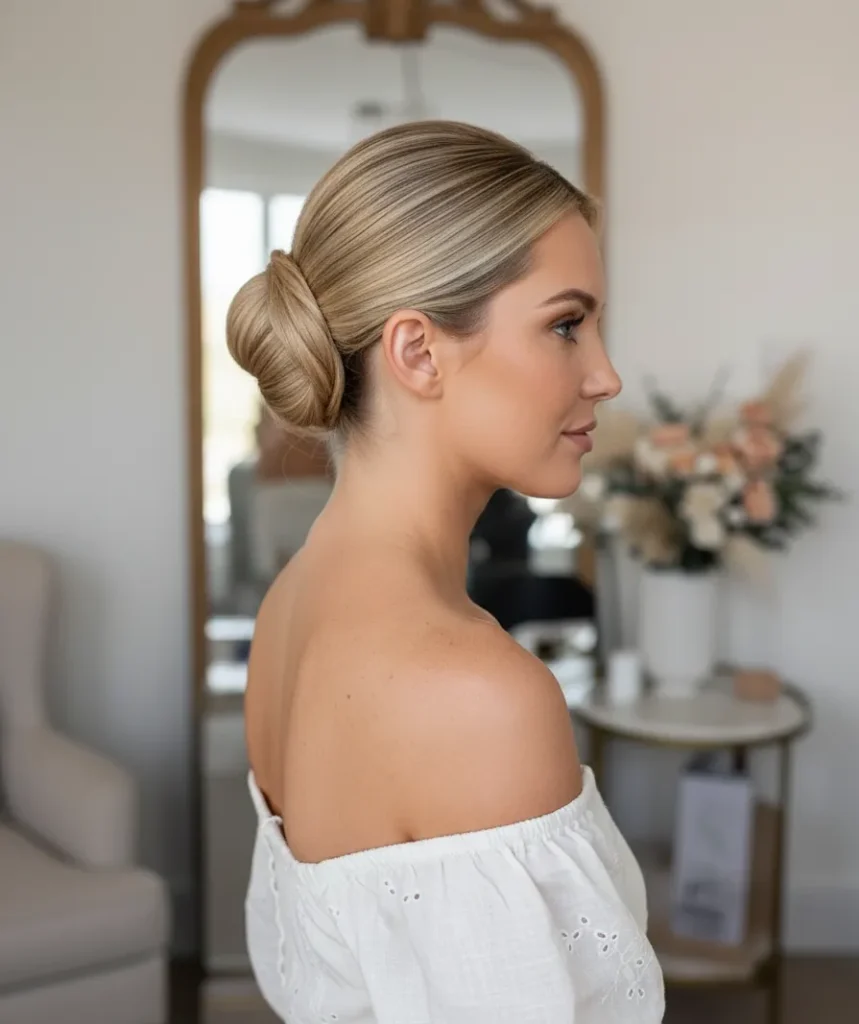
For a formal ceremony or a long veil, a high bun adds height and shows off your neckline. The side braids aren't just decoration: they lock the sides in place and help the style withstand movement. One detail: the veil goes beneath the bun, not on top, so the bedeken doesn't shift it.
3. Crown braids or braids woven into the updo
Braids are probably the most resilient choice for a long wedding with dancing. A crown braid looks beautiful at an outdoor wedding in Marbella, and a braid woven into a low bun adds texture without losing elegance. You can add pearls or small flowers, as long as they don't compete with the veil.
4. Half-up with volume
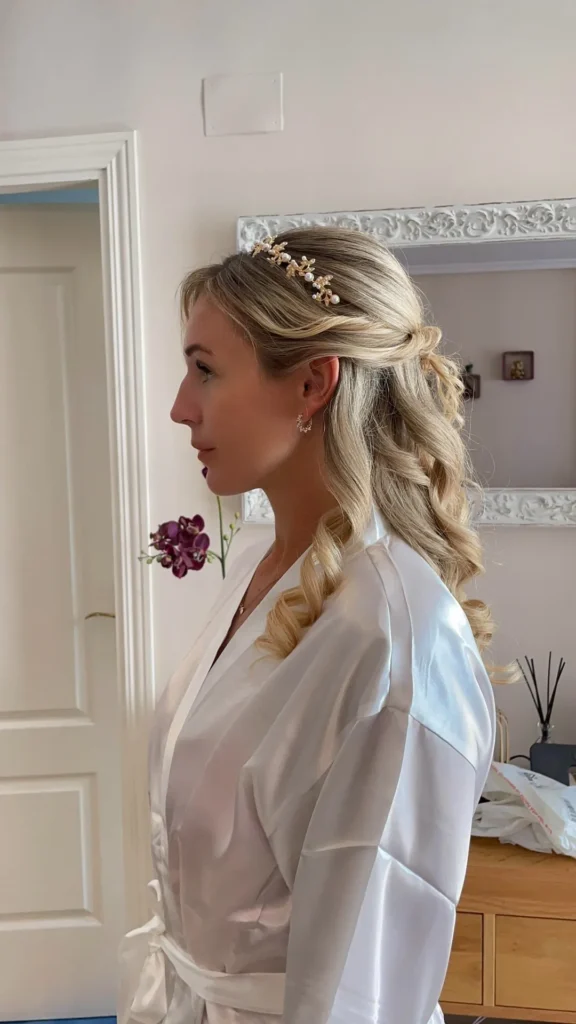
It gives you the polish of an updo and the freedom of wearing some of your hair down. For a Jewish wedding I build it with a firmly anchored crown, because that's where the veil comb goes, and I set the waves in the loose section so they hold up in the Mediterranean heat and humidity.
5. Soft natural waves, with conditions
I love them, but for a wedding with an outdoor chuppah and the hora they aren't my first choice. If you want them, we prep with product, let them set as they cool, and I'll suggest a plan B: a matching clip or pin to sweep one side back before the dancing starts. If you like a glamorous look, have a look at Hollywood waves, which last longer than undone waves.
6. Flower crown with waves
For a garden or finca wedding, a flower crown with waves is very romantic. My advice: in summer, under the Costa del Sol sun, fresh flowers wilt quickly. Choose hardy varieties, ask your florist to prepare them as late as possible, or consider preserved flowers. And if you're wearing a veil, the crown goes in front and the veil behind, never on top.
7. Low updo with a pearl headband, tiara or comb
A low updo with a pearl headband is timeless and perfect for an evening wedding or an elegant hotel. Crystal tiaras and combs also work beautifully, but you need to think about the veil: if the bedeken brings the fabric down over your face, the accessory mustn't snag it. I go into more detail in how to choose hair accessories.
| Hairstyle | With the bedeken veil | Under the chuppah sun | During the hora |
|---|---|---|---|
| Low updo | Ideal | Very good | Very secure |
| High bun with braids | Good (veil underneath) | Very good | Secure if anchored |
| Braids | Good | Very good | The most resilient |
| Half-up | Good with a firm crown | Good | Good |
| Loose waves | Tangles more easily | Suffers in the breeze | Needs a plan B |
Orthodox brides: veils, head coverings and kippahs
In Orthodox communities, married women cover their hair, with a scarf (tichel), snood, hat or wig (sheitel). Many brides keep their hair uncovered during the wedding and start covering it afterwards; others begin that same evening. Customs vary from family to family, so I never assume: I ask, and follow what you and your family tell me.
A few practical points worth discussing at your trial:
- A more opaque veil: some Orthodox brides wear a thicker veil for the bedeken. It's heavier, so the base of the style has to be firmer.
- A modest dress: with a high neck and long sleeves, updos (high or low) balance the silhouette far better than loose hair.
- Covering your hair for the reception: if you'll put on a scarf or hat after the ceremony, I keep the style flat where it will sit, so the change is quick and comfortable.
- Wig (sheitel): if you'll be wearing a wig and want it to be part of the plan for the day, mention it in your first message and we'll talk it through.
In Reform or egalitarian communities, some brides choose to wear a kippah, often in lace or with beading. It sits on the crown, so I keep that area slightly smoother and secure it with small hidden clips, so it doesn't move or flatten the volume in the rest of the style.
Henna night, pre-wedding events and a change of look
Many Sephardi and Mizrahi families hold a henna night before the wedding, with colourful outfits and a very different atmosphere from the chuppah. That hairstyle can be more festive and freer. If you're having a pre-wedding event or a dinner the night before, we can book it together with the wedding day.
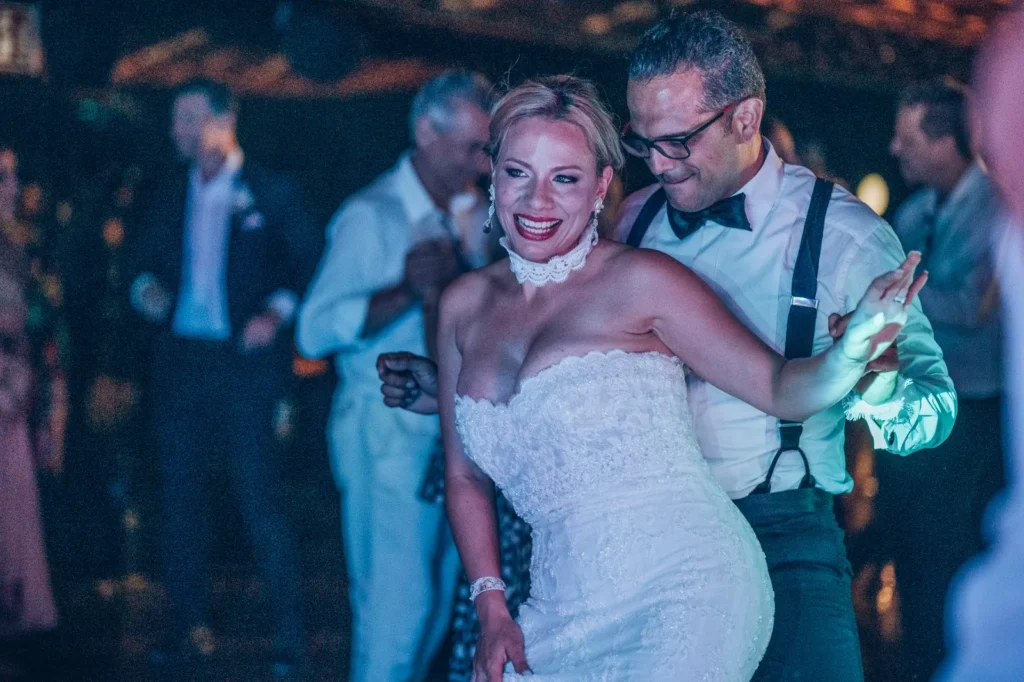
I also offer a change of look between the ceremony and the party: from an updo with a veil to glam waves or a more relaxed bun for dancing. That's what we did for Yami at her wedding at Huerta del Conde: a soft, textured style for the ceremony and a glam transformation for the party.
How we plan the morning of your Jewish wedding
- Date and Shabbat. Jewish weddings aren't held on Shabbat, so they usually fall on a Sunday, a weekday or a Saturday night. If yours is on a Saturday night and your family keeps Shabbat, the hair schedule needs to be agreed well in advance: tell me in your first message.
- Fasting. Many brides fast on their wedding day until after the ceremony. I plan the morning so you're not sitting in the chair longer than necessary: bridal hair takes between one and two hours.
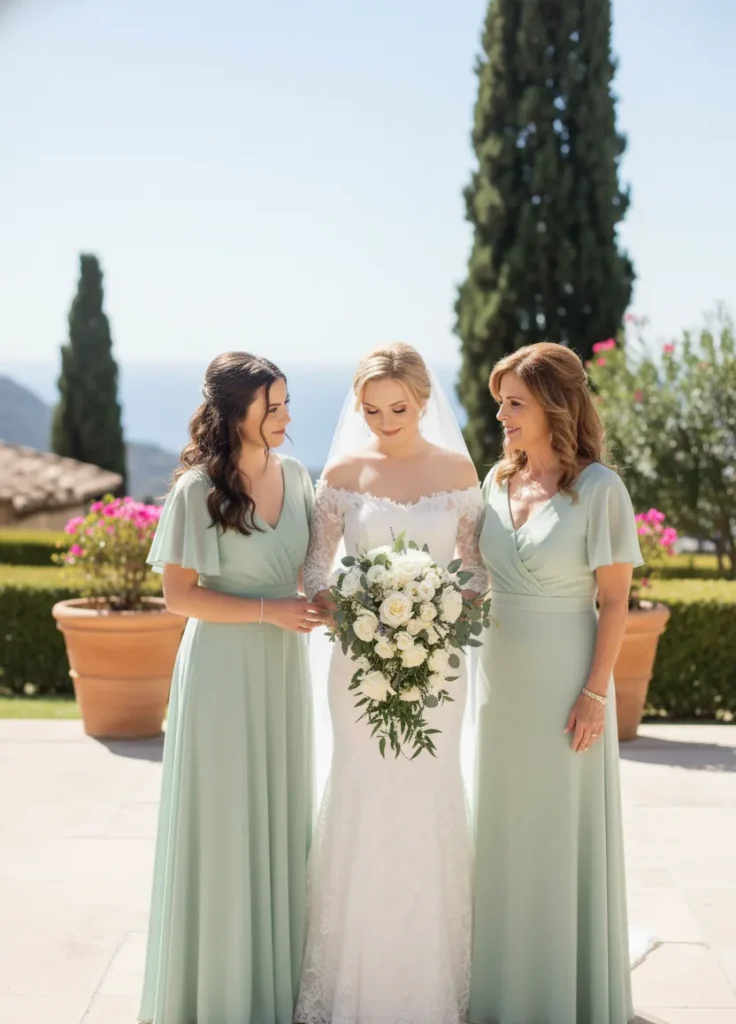
- Your group first, you last. I also style your mother, sisters and bridesmaids, up to around 10 people, and leave you until last so you're as fresh as possible for the kabbalat panim.
- Veil ready before photos. We place the veil and rehearse the bedeken movement before the photographer arrives.
- Touch-up and photos. I do a touch-up just before the ceremony and stay with you until the photo session is finished.
To see how all the timings of the day fit together, there's a guide to planning your wedding-day timeline. And if you need make-up too, my team of make-up artists works to the same fixed schedule as I do.
Ceci’s tip
Ask for a getting-ready room with natural light. It makes my work easier, and for the kabbalat panim and bedeken photos it makes a huge difference.
Your trial: with your veil, even if you live abroad
The trial is always in person. Bring your veil or headpiece, a photo of your dress and, if you'll wear one, your kippah or head covering. If you live abroad, we do it once you arrive in Spain, a few days before the wedding. At the trial we rehearse the bedeken for real: we lower the veil, lift it again and check that nothing shifts.

“She did my bridal updo for my wedding and it turned out better than expected. […] I cannot recommend Ceci enough for any occasion.”
Madison Stroever · Google review
If you're travelling to get married here, my guide to destination weddings in Spain may help. And if your wedding blends traditions, I've also written about Hindu and Indian bridal hairstyles, with plenty of jewellery and several days of celebrations.
Getting married in Marbella or Málaga?
Message me on WhatsApp with your date, time, venue and how many people need their hair done. I'll reply myself with a fixed quote.
If your wedding is in the city or inland in the province, here's my bridal hair service in Málaga.
Frequently asked questions
Which hairstyle works best with a bedeken veil?
A low updo or a braided bun. The comb sits just above the bun on a base of crossed pins, so the veil can come down over your face and go back without moving anything. A half-up style also works if the crown is well anchored. We always test it at the trial with your own veil.
Do Jewish brides have to cover their hair on the wedding day?
It depends on the community and the family. In Orthodox communities married women cover their hair, and many brides start after the wedding; some that same evening. It's not usual in Reform communities, although some brides choose to wear a kippah. The best thing is to tell me about your plans so we can prepare together.
Can I wear my hair down at a Jewish wedding?
Yes, as long as your community doesn't ask otherwise. But if the chuppah is outdoors and there will be a hora, I'd suggest a half-up style or structured, well-set waves. The coastal breeze tangles loose hair with the veil, and the chair dance is hard on unsupported hair. I always suggest a plan B for the party.
How do I make my hairstyle survive the hora?
With a well-built base: crossed pins, a hidden anchoring braid if needed, and waves set while warm with a strong-hold spray. Low updos and braids are the most resilient. Tell me at the trial that there will be a hora so I can build the style with the chair and the dancing in mind.
When do I have my hair trial if I live outside Spain?
Once you arrive in Spain, a few days before the wedding. The trial is always in person: I need to see your hair, your veil and a photo of your dress to decide on the style and check that the bedeken veil comes down and goes back without any trouble. We book it at the same time as your wedding date.
Do you also style the mother, sisters and bridesmaids?
Yes. I style the bride and her group: mother, sisters, bridesmaids and guests, up to around 10 people per wedding. I plan the order so you're last and freshly styled for the first photos and the kabbalat panim. If you need make-up, my team of make-up artists works to the same schedule.
How far in advance should I book?
I recommend booking 2 to 6 months ahead, especially in high season on the Costa del Sol. Message me on WhatsApp with your date, time, venue and number of people. I'll send you a fixed quote, and the date is secured with a deposit that is then deducted from the total.