To work out how to choose a wedding veil, start with three questions: how far down you want it to reach (length), which part of your dress you don't want to cover (back, lace, train) and which hairstyle you'll wear, because the veil is anchored in it. Then think about the venue: at a seaside wedding, the wind has more say than fashion.
- Dress with a beautiful back: a fine, plain tulle veil, or a short one.
- Plain dress: a veil with lace or an edging to add detail.
- Low bun: veil under the updo; hair down: veil at the crown on a firm base.
- Beach wedding: a light veil that can come off after the ceremony.
- Always: bring it to your hair trial.
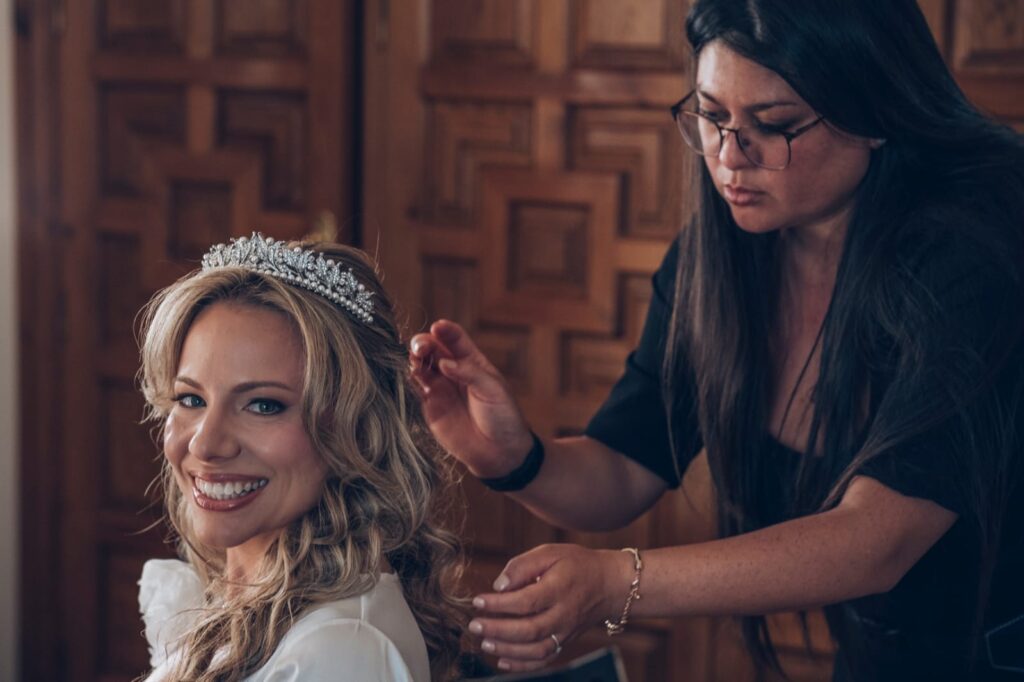
I'm Ceci, a hairstylist from Málaga, and I've been doing bridal hair on the Costa del Sol for more than 7 years. I'm the one who puts the veil in, so this is what works from the point of view of the person who has to anchor it and take it out without ruining the hairstyle. If you'd like to know more about me, here's my story.
Wedding veil lengths: which one to choose
Length is the first thing that defines a veil. The longer it is, the more formal and heavier it feels; the shorter, the more freedom you have to move.
| Length | Where it falls | Best for | Watch out for |
|---|---|---|---|
| Blusher (covers the face) | Chin or chest | Religious ceremonies, a symbolic moment | Practise lifting it |
| Shoulder or elbow | Shoulders or mid-arm | Civil, relaxed, short dresses | Can cut across a dress with a detailed waist |
| Hip or fingertip | Hips or fingertips | Almost any; the most versatile | Very little; the easiest to wear |
| Waltz or ballet | Between knee and ankle | Brides who want length without a trail | Easy to sit on |
| Chapel | Floor, with a short trail | Church, country estate, formal | Weight on the comb |
| Cathedral | Beyond the dress train | Formal ceremonies, dramatic photos | Wind, weight and who carries it |
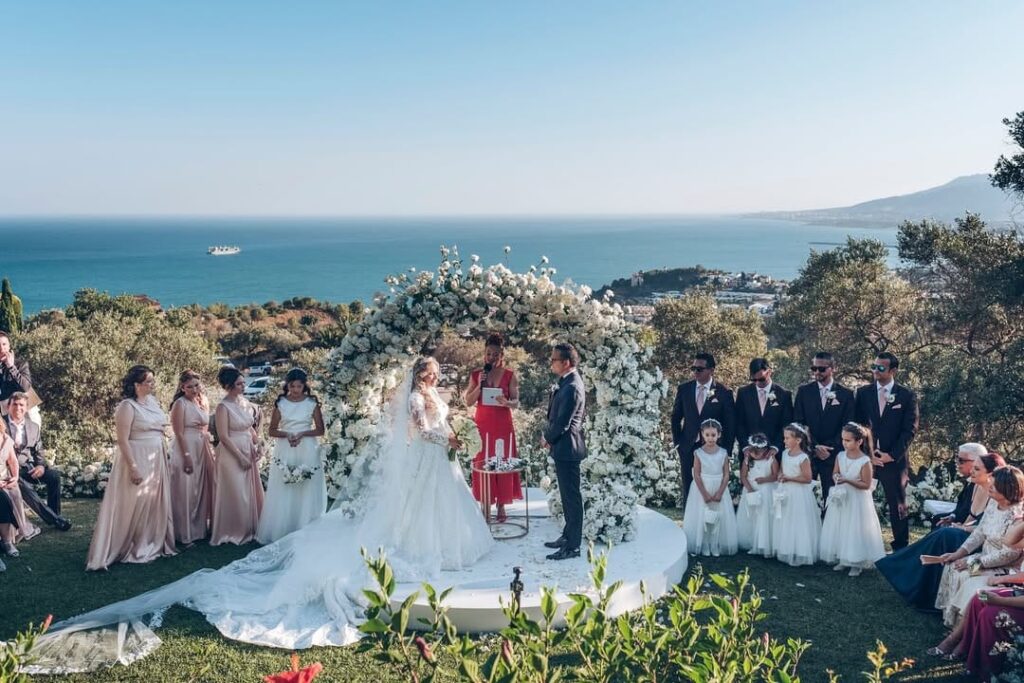
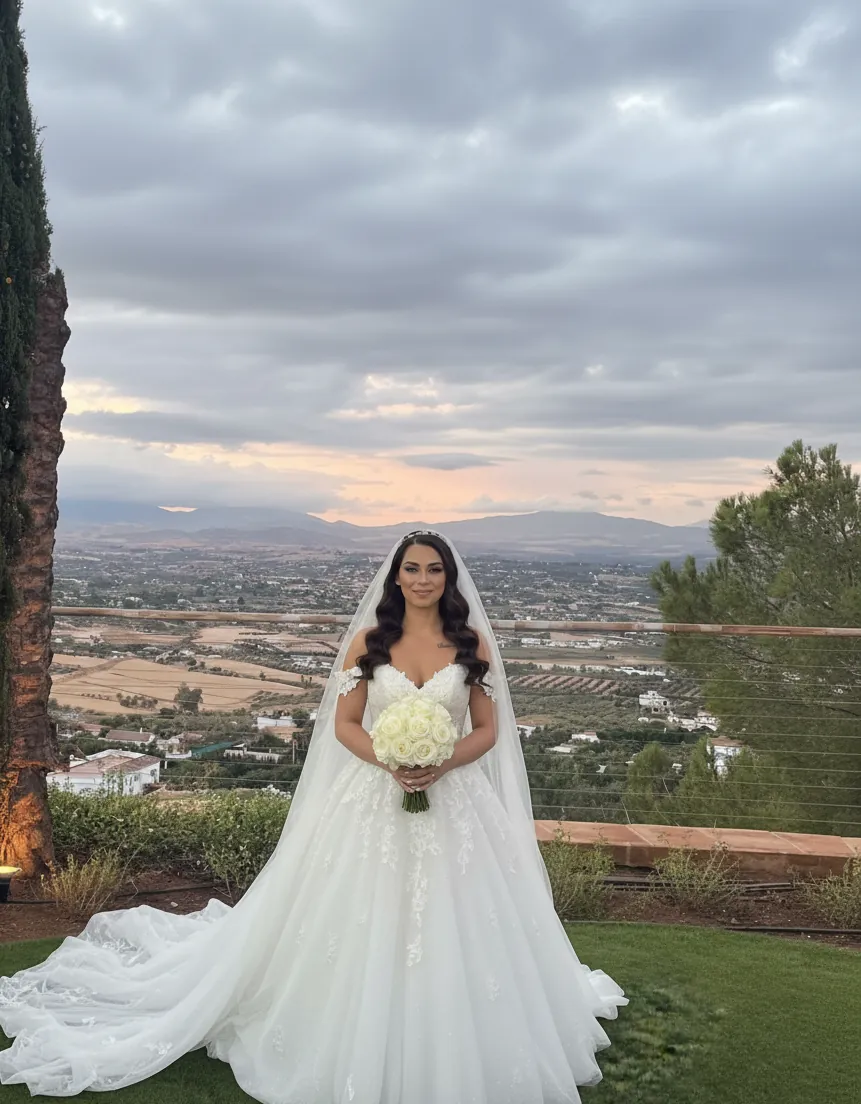
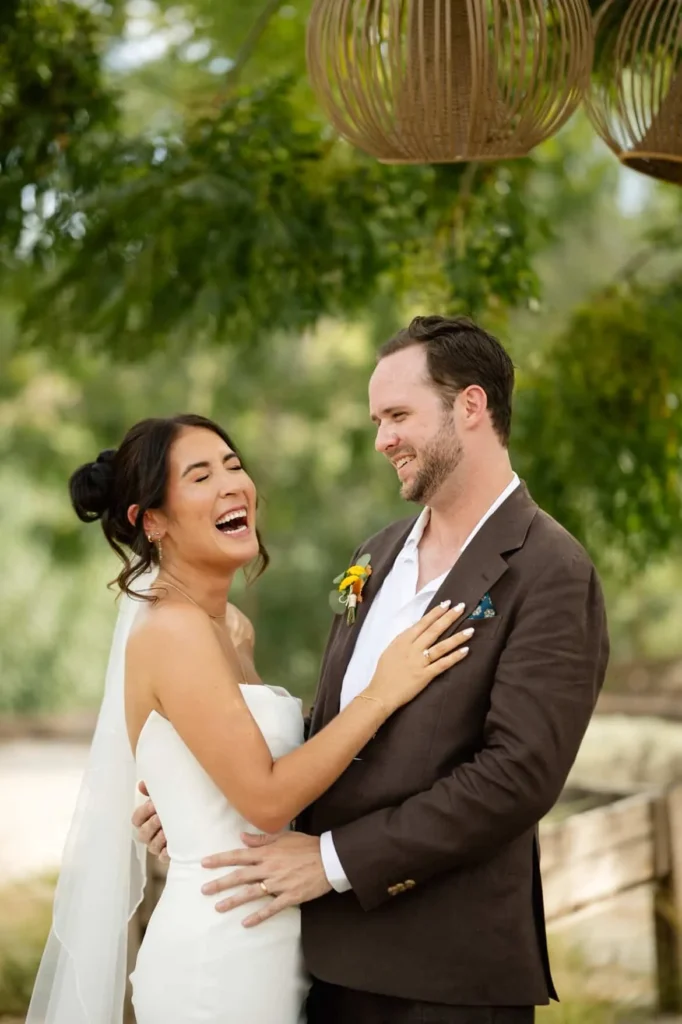
My view: a hip or fingertip veil works best for most Costa del Sol weddings. It gives you the bridal effect in photos, doesn't weigh much, doesn't snag on the grass at a country estate and is comfortable through the drinks reception if you decide to keep it on.
Layers, tulle and edges: how the veil falls
Two veils of the same length can look completely different depending on how they fall:
- Single layer: falls close to the hair and back. The cleanest option and the one that shows the hairstyle best.
- Two layers: the front layer covers your face as you walk in and is then flipped back. Adds volume at the crown.
- Soft tulle: falls fluidly, like water; ideal with crepe or satin dresses.
- Stiffer tulle: holds its shape and has more presence; suits princess-style dresses.
- Raw edge, ribbon edge or lace: a raw edge is the most discreet; lace is the most eye-catching.
How to choose a wedding veil to match your dress
The rule I always repeat: veil and dress mustn't compete. If the dress has lace, embroidery or beading, the veil should be plain or have a minimal edge. If the dress is plain, the veil can carry the lace or appliqués.
- Open back or buttoned back: a very fine single-layer tulle veil, or a short one that doesn't cover it.
- Dress with a train: the veil should be either longer than the train or clearly shorter; the same length looks odd.
- Colour: the veil's white has to match the dress (white, ivory, champagne). Take a fabric swatch if you can.
Your height matters too. If you're petite, in-between lengths (knee, mid-calf) can cut the figure; a short hip-length veil, or a long, very fine one that reaches the floor, is more flattering. If you're tall, you can wear almost any length, and a cathedral veil looks particularly striking.
If you're still choosing the dress, in how to choose a wedding dress I explain how to think about it alongside your hair and make-up.
Veil and hairstyle: where it goes
This is where I can help you most. The veil has a comb, and that comb needs a firm base within the hairstyle. Where we put it completely changes the result.
Under the updo
With a low bun, the veil sits just beneath it. It's the most classic and most elegant placement: the updo is fully visible from the front and back, and the veil falls cleanly. It's also the easiest to remove later without touching the hairstyle. There are bun ideas in my guide to bridal updos and half-up styles.
Above the updo or at the crown
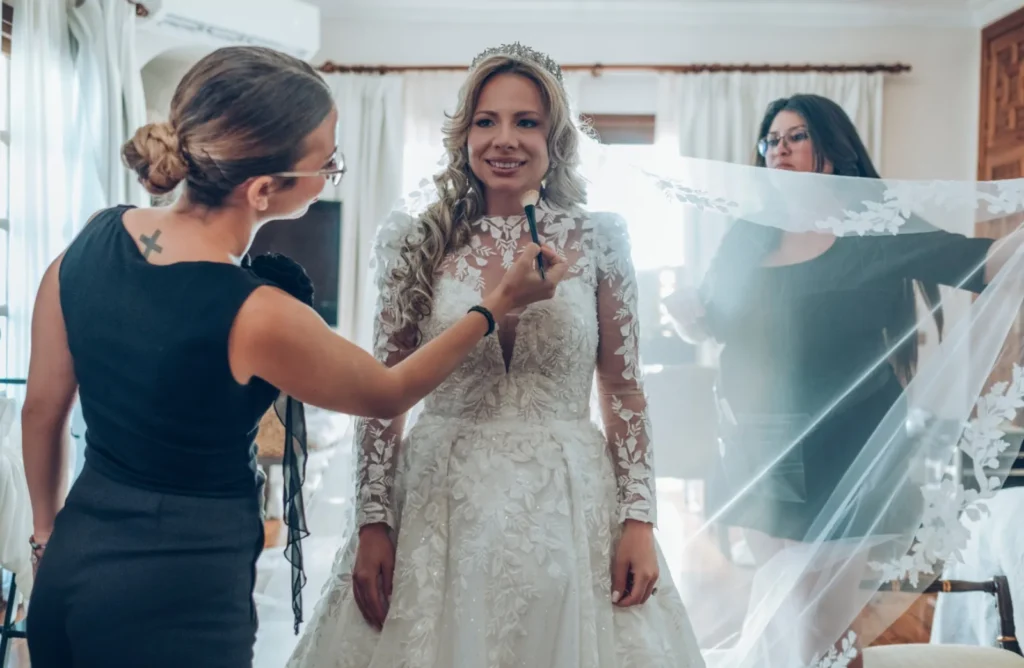
Placed higher up, the veil adds height and a more dramatic, traditional church feel. It works with high updos and two-layer veils. The downside is that it hides part of the bun in photos from behind.
With hair down or waves
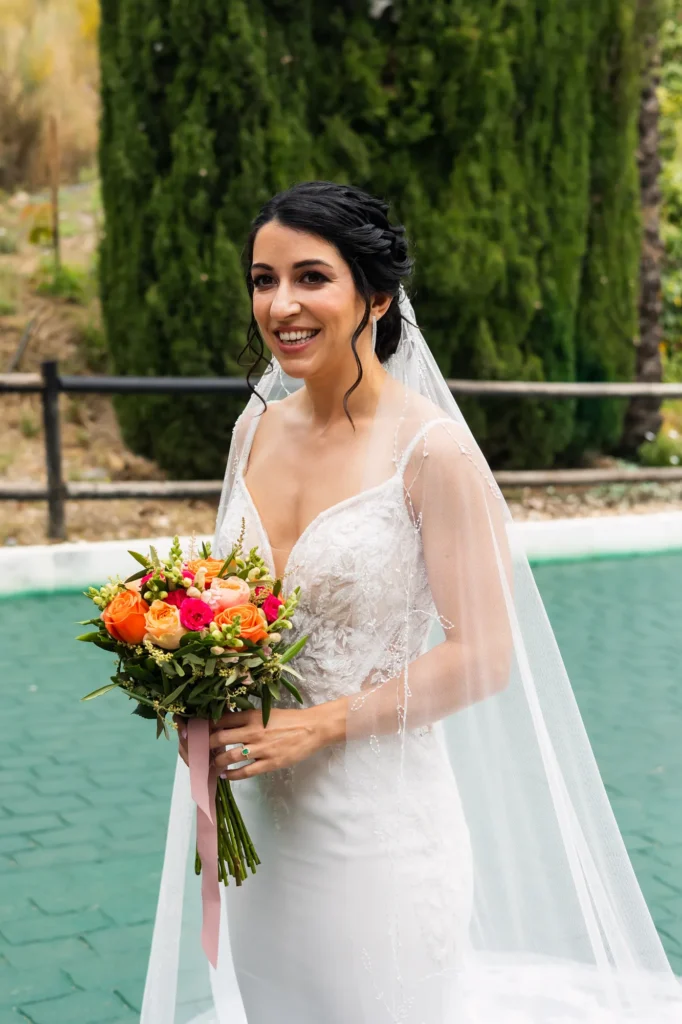
With hair worn down, the veil sits at the crown on a small hidden base of pinned or braided hair, because the comb alone won't hold in loose hair. With glam waves, a very fine tulle is best so it doesn't flatten the shape.
With short hair
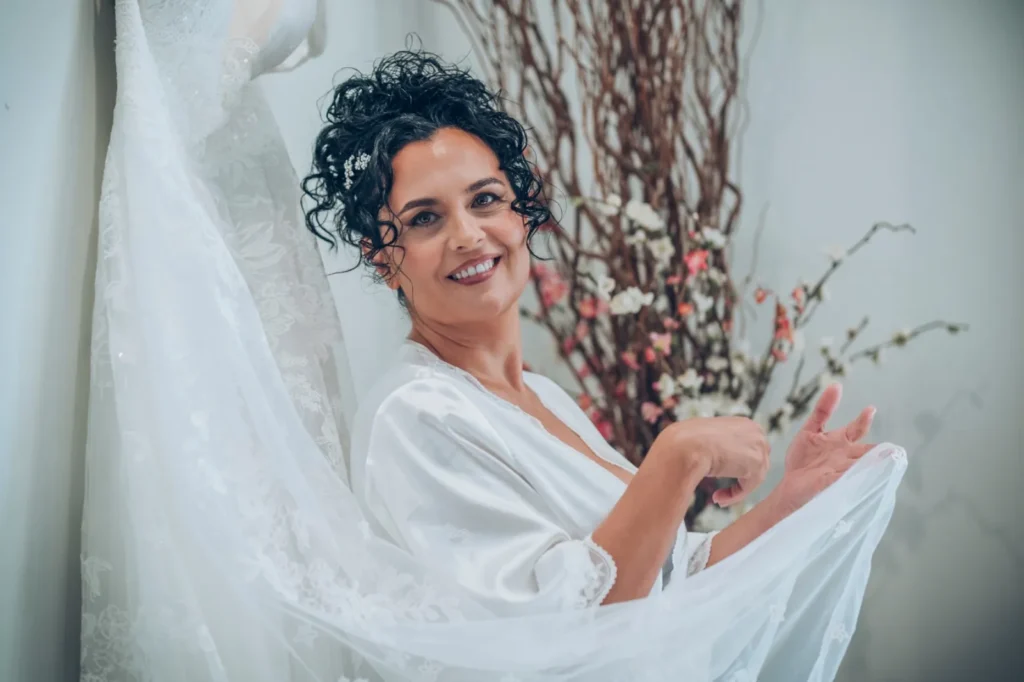
Short hair can wear a veil too. The trick is the fixing: crossed pins under the comb or a small headpiece to hold it. With short hair I usually recommend single-layer veils in very light tulle, which don't pull backwards.
Ceci’s tip
Decide at the trial whether you'll take the veil off for the party. If so, I'll place it so it comes out in one movement, without shifting a single pin in your hairstyle.
The Spanish mantilla
The mantilla is a lace veil with an ornate edge, traditionally worn over a tall comb. Without the comb, it falls framing the face and looks very romantic with simple dresses. It's beautiful and very Spanish, and many international brides marrying in Andalusia love the idea.
What you need to know: it's heavier than a tulle veil, so it needs a very firm low bun as its base, and with lace on your head there's no need for a headpiece. If you like the comb but not the full mantilla, have a look at combs in my bridal headpiece guide.
Your veil at a beach wedding and in the wind
On the Costa del Sol, by the sea, there's almost always a breeze in the afternoon. A cathedral veil on the sand can give you stunning photos, but it can also turn into a sail that pulls on your hairstyle throughout the ceremony. What I recommend:
- A fine tulle veil, hip or fingertip length, rather than cathedral.
- A low, well-secured hairstyle: a low bun or half-up style, never loose hair with a long veil.
- Anchor the veil at two points, not just with the comb.
- If you want a long veil for photos, wear it just for that moment and take it off afterwards.
There's more advice on seaside hair in beach ceremonies.
Taking the veil off for the party
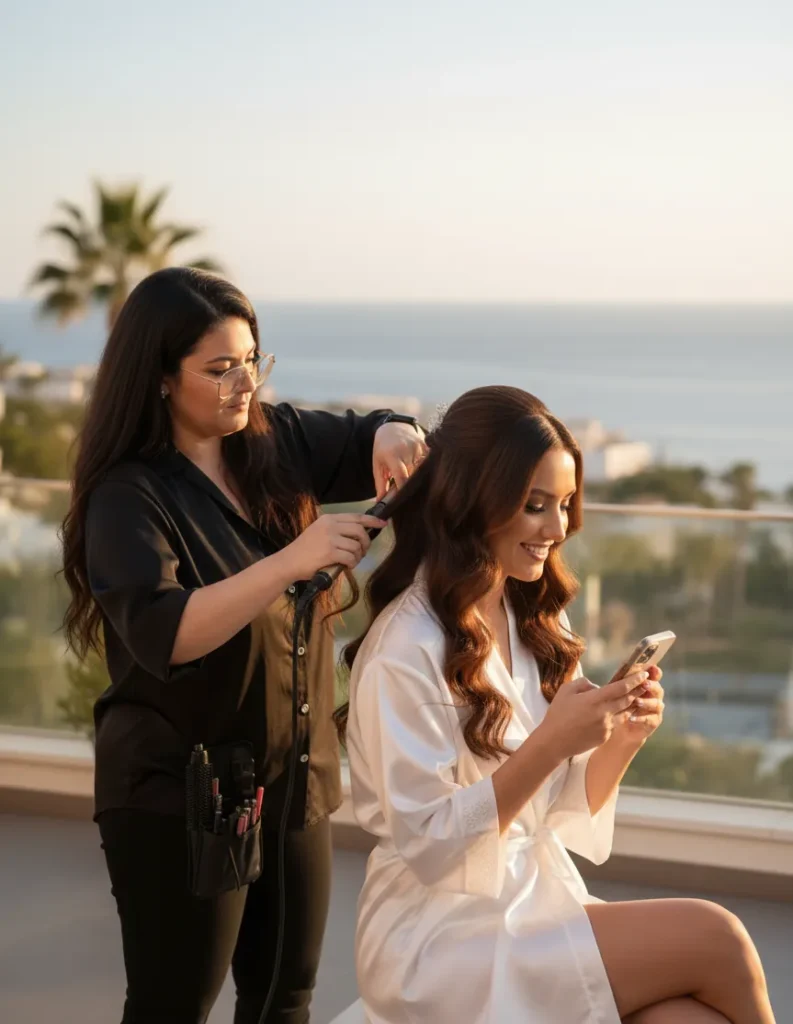
Most of the brides I style take their veil off after the photo shoot or before dinner. It's comfortable, lets you dance and hug without worrying, and it's the simplest way to change your look. As I stay with you until the photo shoot is finished, I usually take it out myself; if you'd rather keep it on longer, I'll show your mum or a friend how to do it at the trial.
If you want a bigger change, like Yami, who went from a soft ceremony style to a glam party look, we plan it from the start. You can see the result in Yami and Jorge's wedding. And if you're wearing a headpiece or jewelled pins as well as the veil, my article on bridal hair accessories explains the order they go in.
Bring your veil to the hair trial
The trial is always in person, with your actual veil, the headpiece if you're wearing one and a photo of the dress. If you live outside Spain, we do it when you arrive, a few days before the wedding. With the veil on, we check the weight, the anchor point and how the hairstyle looks from behind, which is how your guests will see you during the ceremony. I come to you anywhere in the area; the details are on my bridal hair in Marbella page.
“She did my bridal updo for my wedding and it turned out better than expected. […] I cannot recommend Ceci enough for any occasion.”
Madison Stroever · Google review
Got your veil?
Message me on WhatsApp with your wedding date, time and venue, and we'll design your hairstyle around your veil from the trial onwards.
Frequently asked questions
Which wedding veil length is the most flattering?
It depends on the dress and your height, but a hip or fingertip veil is the most versatile: it suits almost everyone, it's light and it works in a church, on a country estate or on a beach. If you're petite and wearing a train, a very fine cathedral veil lengthens the silhouette; an in-between length can cut the figure.
Does the veil go above or below the bun?
Both are correct. Under the bun is the most classic: the updo is fully visible and the veil comes out easily for the party. Above, at the crown, adds height and a more traditional feel, but hides part of the hairstyle in photos from behind. We decide at the trial based on your hairstyle and dress.
Can you wear a veil with your hair down?
Yes. The veil sits at the crown on a small hidden base of pinned or braided hair, because the comb alone won't hold in loose hair. With waves, a very fine tulle is best so it doesn't flatten them. For outdoor weddings with wind, I recommend a half-up style, which holds the veil better.
What's the best veil for a beach wedding?
A fine tulle veil at hip or fingertip length, anchored at two points on a low bun or well-secured half-up style. On the Costa del Sol there's usually a breeze by the sea in the afternoon, and a cathedral veil can pull on your hairstyle. If you want a long veil for photos, wear it just for that moment.
When does the bride take her veil off?
There's no fixed rule. Most brides take it off after the photo shoot or before dinner, so they're comfortable for the drinks reception and dancing. If the veil is placed correctly under the bun, it comes out in one movement without ruining the hairstyle. I stay until the end of the photo shoot, so I can take it out for you.
What's the difference between a veil and a mantilla?
A veil is usually tulle, plain or lightly detailed, and is anchored into the hairstyle with a comb. A mantilla is a lace veil with an ornate edge, typical of Spain, traditionally worn over a tall comb. It's heavier, frames the face and needs a very firm low bun as its base.