Getting bridal makeup for your skin tone right comes down to two things: how light or deep your skin is (fair, medium, tanned or deep) and its undertone (cool, warm, neutral or olive). Your foundation has to match your neck and chest, not just your face, while blusher, eyeshadow and lipstick are chosen by undertone. On the Costa del Sol there's a third factor too: the tan you have on your wedding day.
- Fair skin: foundation that isn't too pink, peach or soft pink blusher, very little bronzer.
- Medium or olive skin: golden or neutral foundations, never pink; bronzes and terracottas.
- Tanned or deep skin: an exact undertone match, gold or bronze highlighter and powders with no white cast.
- Sun-tanned skin: foundation is adjusted on the wedding day itself, not copied from the trial.
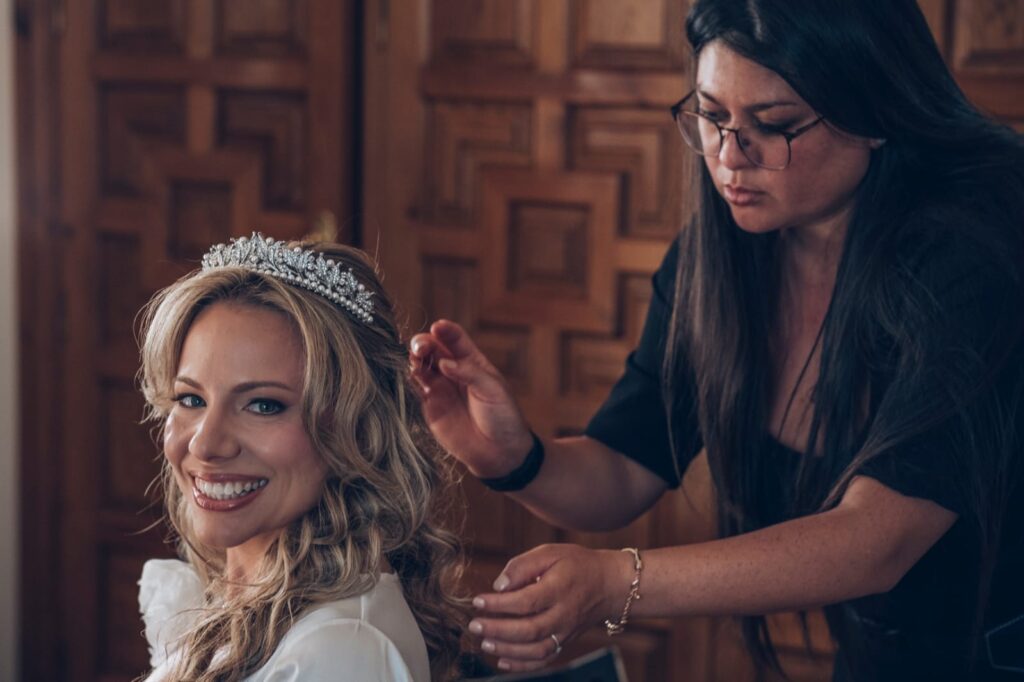
I'm Ceci, a bridal hairstylist from Málaga with more than 7 years of experience on the Costa del Sol (more about me here). The makeup is done by my team of makeup artists, who work with me on the wedding morning, in the same place and on the same schedule. I see very fair-skinned brides from the UK, Andalusian brides tanned from a whole summer outdoors and brides with deep skin flying in from the United States; what follows is what we've learnt doing their hair and makeup together in Málaga and Marbella.
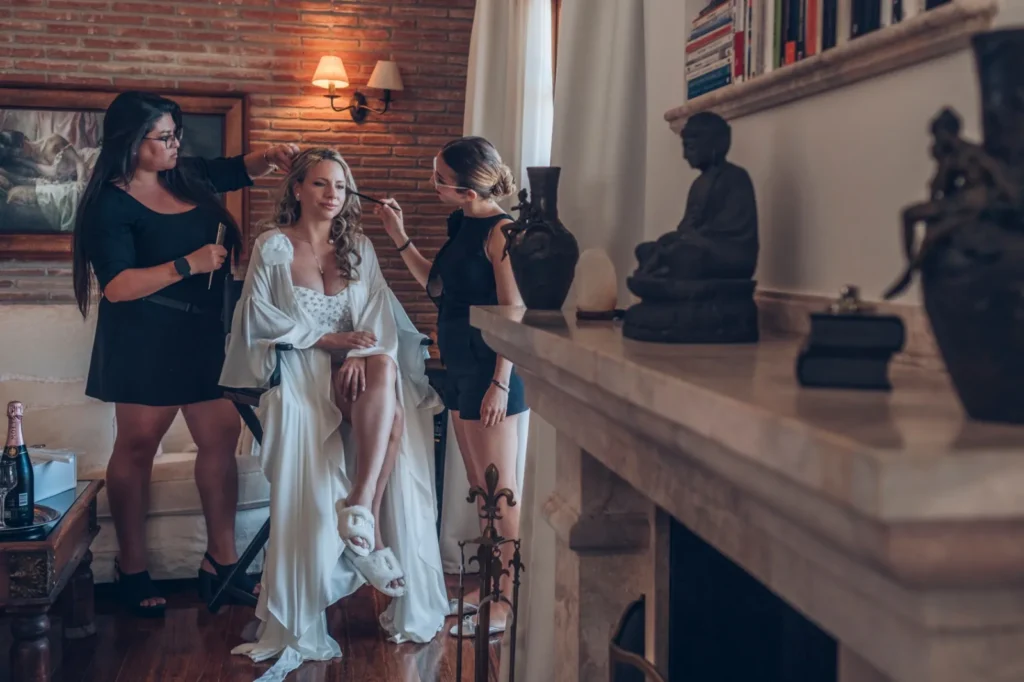
Skin tone and undertone are not the same thing
Skin tone is how light or deep your skin is. Undertone is the colour beneath, and it doesn't change when you tan. Two brides with the same skin tone may need different foundations: one with a pink base, the other with a golden one. When a foundation 'looks wrong' even though it's your shade, it's almost always an undertone problem.
How to find your undertone without relying on your veins
The trick of looking at the veins on your wrist is very misleading, because it depends on the light. It's better to combine several clues:
- Jewellery: if gold brightens you more, you're probably warm; if it's silver, cool; if both suit you, neutral.
- Sun: if you burn and go pink before tanning, you're usually cool or neutral; if you turn golden quickly, warm or olive.
- White: if bright white drains you and ivory flatters you, you lean warm.
- The definitive test: three foundation shades on the jawline, next to a window. The one that disappears is yours.
Olive undertone, the most misunderstood
It's very common in Mediterranean and Latin skin. It has a base that's green and golden at the same time, so pink foundations turn it grey and very yellow ones turn it orange. A neutral foundation with a hint of gold usually works, with warm but not orange tones on the cheeks and lips.
Bridal makeup for fair skin
Many of the British brides who marry here have very fair skin, often with some redness. The aim is to add radiance without the face looking washed out or overdone.
- Foundation: your exact shade or a touch warmer, with a satin finish. Any redness is neutralised first with a little product, not covered up with more foundation.
- Blusher: peach, soft pink or light coral. Bronzer, very sparingly: on fair skin it quickly looks muddy.
- Eyes: champagne, soft browns and taupes; brown liner rather than black for daytime.
- Lips: pinky nude, dusty rose or, if you fancy colour, raspberry or a blue-based red.
What makes fair skin tricky here is the sun in the days beforehand. Getting burnt two days before isn't just about redness: it's skin that starts peeling on the wedding day itself, and no foundation can fix that.
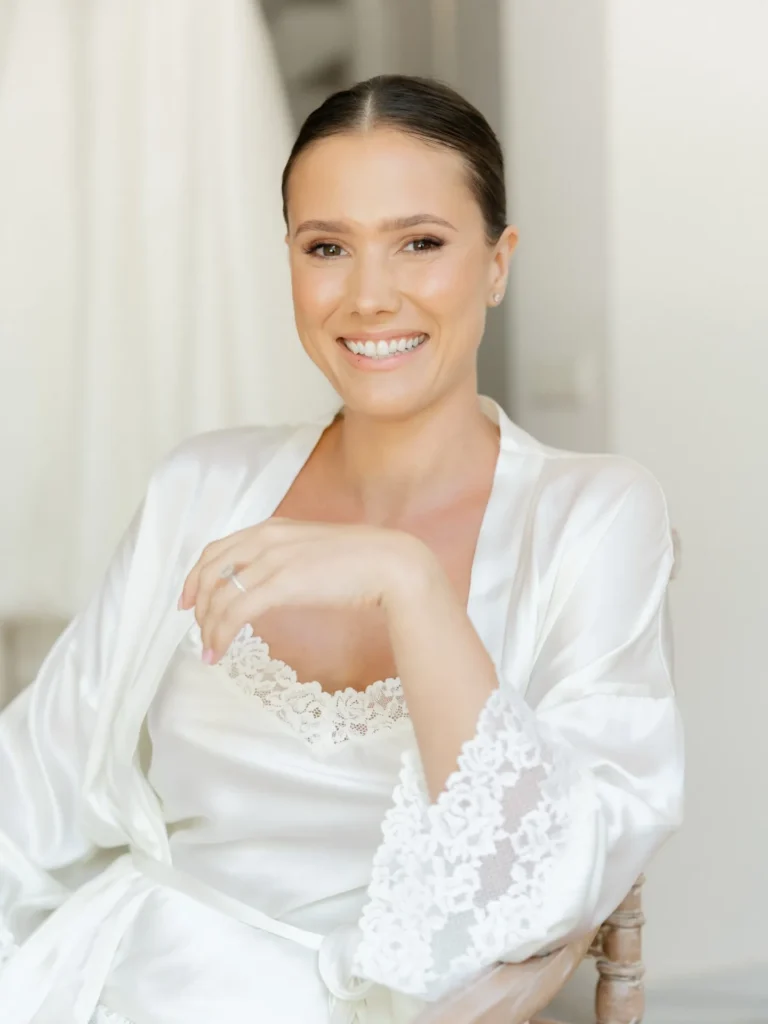
Bridal makeup for medium or olive skin
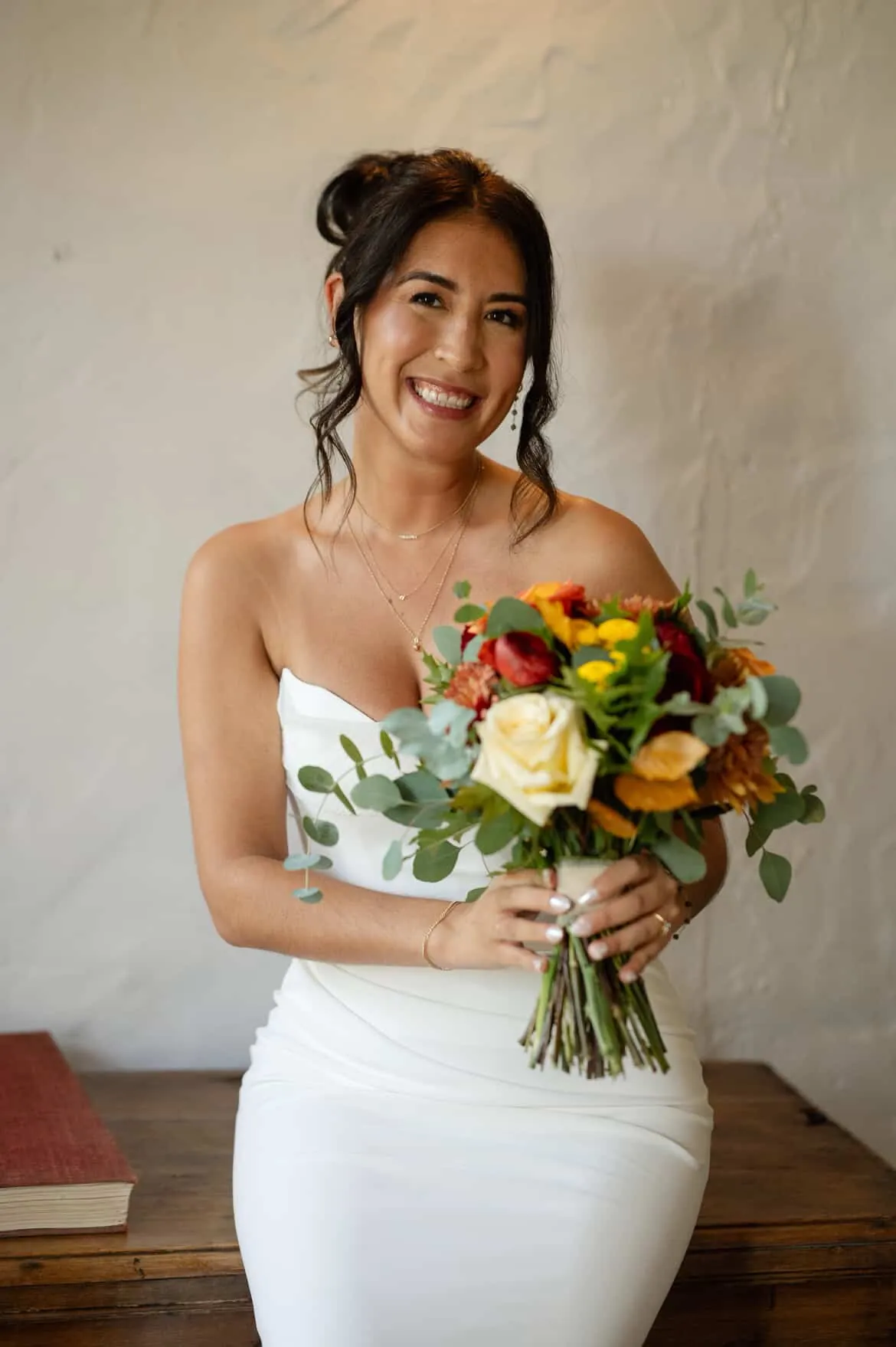
This skin has the most options, and it also suffers most from the wrong foundation. The key is not to lean pink.
- Foundation: golden or neutral, satin or semi-matte depending on how oily your skin gets in the heat.
- Blusher: peach, coral or soft terracotta, with a touch of bronzer where the sun would naturally hit.
- Eyes: bronze, copper, gold and warm browns.
- Lips: warm nude, peachy pink or brick red for the evening.
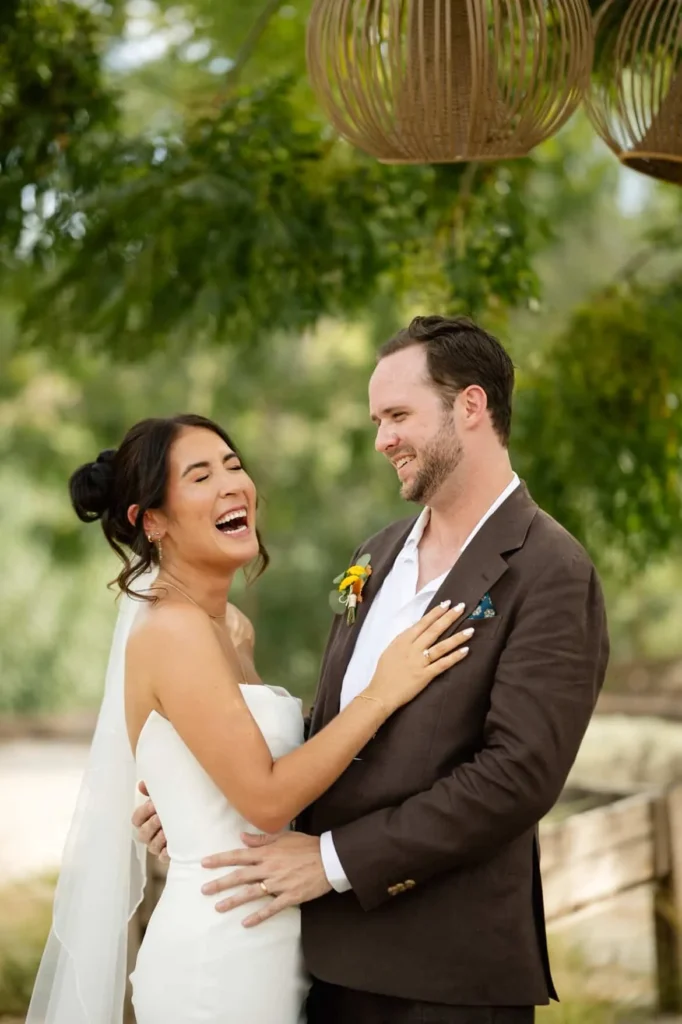
Bridal makeup for deep and dark skin
On deep and dark skin, undertone matters even more: it can be red, golden or neutral, and the face, neck and chest often aren't exactly the same shade. That's why the right foundation is often a blend of two.
- Foundation: it should never lighten the skin. A foundation that's too light is what causes that ashy look in photos.
- Dark circles: corrected first with a peach or orange tone and then evened out, rather than covered with a light concealer.
- Powder: tinted or designed for deep skin. Very white translucent powders can leave a white cast under flash.
- Highlighter and blusher: gold, bronze or copper; plum, terracotta or berry blusher.
- Eyes and lips: rich gold, bronze, chocolate or plum on the eyes; chocolate nude, burgundy or deep red on the lips.
Ceci’s tip
If you have deep skin, bring your everyday foundation to the trial, even if it isn't a professional product. Seeing the shade you feel like yourself in helps the team stay true to your face.
Tanned skin: the Costa del Sol factor
Here, lots of brides arrive on their wedding day with more of a tan than at the trial: they've spent the week on the beach with their family, or they're marrying at the end of summer. If the foundation is copied straight from the trial, the face ends up lighter than the neck. That's why the shade is adjusted that same morning, to the skin you have on the day.
- Bikini or strap marks: think about your dress's neckline and back before sunbathing. A strapless dress shows every tan line.
- Self-tan: if you use it, don't make the wedding your first time. Test it before your makeup trial and apply it a few days before the wedding, never the night before.
- Sun protection: the week before, shade, a hat and sunscreen. Sunburnt skin can't be made up in the same way.
- Body: neck, chest, shoulders and back need to match the face, especially with sleeveless dresses.
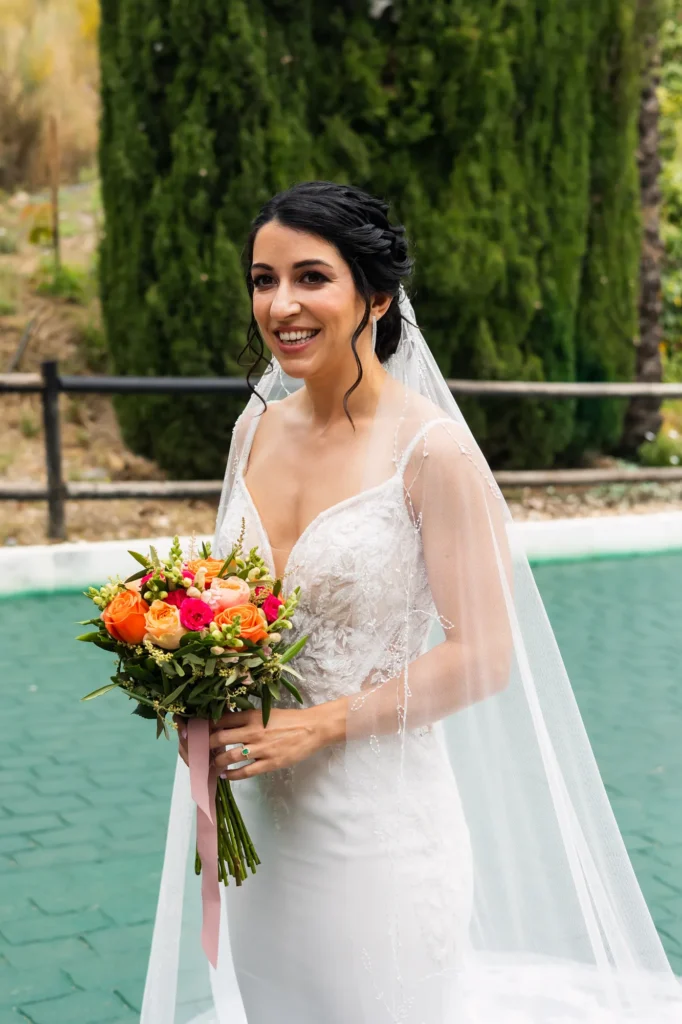
Ceci’s tip
If you're going to spend the week before at the beach, tell us when you book. The foundation on the day is matched to your skin that morning, not to your skin at the trial.
How your skin looks in photos
A foundation can look perfect in the mirror and still photograph badly. These are the biggest factors:
- Flash: some powders and some foundations with a high sun filter reflect the light and leave the face whiter than the neck in party photos.
- Heat: at an outdoor summer wedding the T-zone gets shiny. It's mattified where needed, without dulling the rest of the face.
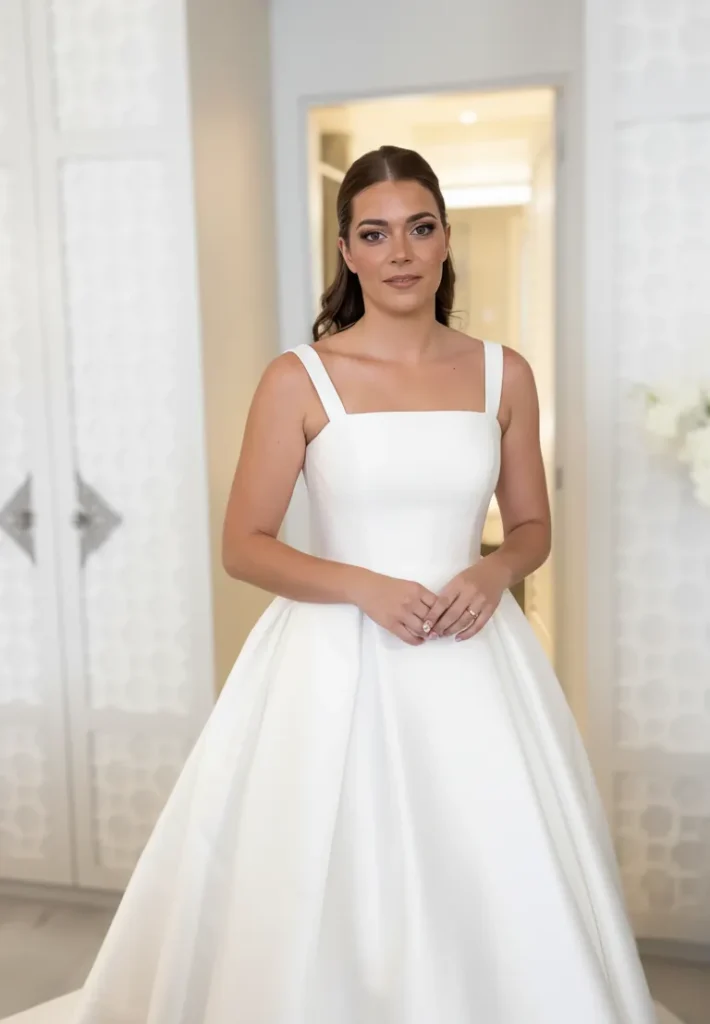
- The white of your dress: bright white makes warm skin look more yellow; ivory and champagne soften it.
- Continuity: face, neck and chest in the same tone. In full-length photos it's the first thing you notice.
If you're still choosing your dress, bear this in mind too: in choosing a wedding dress with your hair and makeup in mind I explain what to look out for.
| Skin tone | Foundation | Blusher | Eyes | Lips |
|---|---|---|---|---|
| Fair | Your shade or a touch warmer, satin finish | Peach, soft pink | Champagne, taupe, soft brown | Pinky nude, raspberry |
| Medium or olive | Golden or neutral, never pink | Coral, soft terracotta | Bronze, copper, gold | Warm nude, brick red |
| Deep | Exact undertone, sometimes a blend of two | Terracotta, plum | Rich gold, bronze, chocolate | Chocolate nude, burgundy |
| Dark | Never lighter; tinted powder | Plum, berry | Gold, plum, copper | Deep red, wine |
Eyeshadow colour also depends on your undertone; if you want to fine-tune your eyes, I explain it in bridal eye makeup. And if you'd like to know what's in style, have a look at the 2027 bridal makeup trends.
Your hair colour matters too
This is what I see from my side. Hair frames the face and changes how your skin reads: golden highlights warm the face and ashy tones cool it down. If you want to lighten your hair before the wedding with balayage or Californian highlights on dark hair, do it in good time and tell the makeup team before the trial, so they work with your final colour.
Prepare your skin before the wedding
- Daily hydration in the months beforehand. Well-hydrated skin holds foundation better and looks more even.
- Nothing new in the final weeks: no strong peels and no products you've never used. A last-minute reaction is the hardest thing to cover.
- A facial with your usual therapist, with enough time for your skin to settle before the day.
- Sensitive skin or heat-related redness: mention it at the trial, because it changes the choice of products.
Mum, bridesmaids and family: different skins, one group
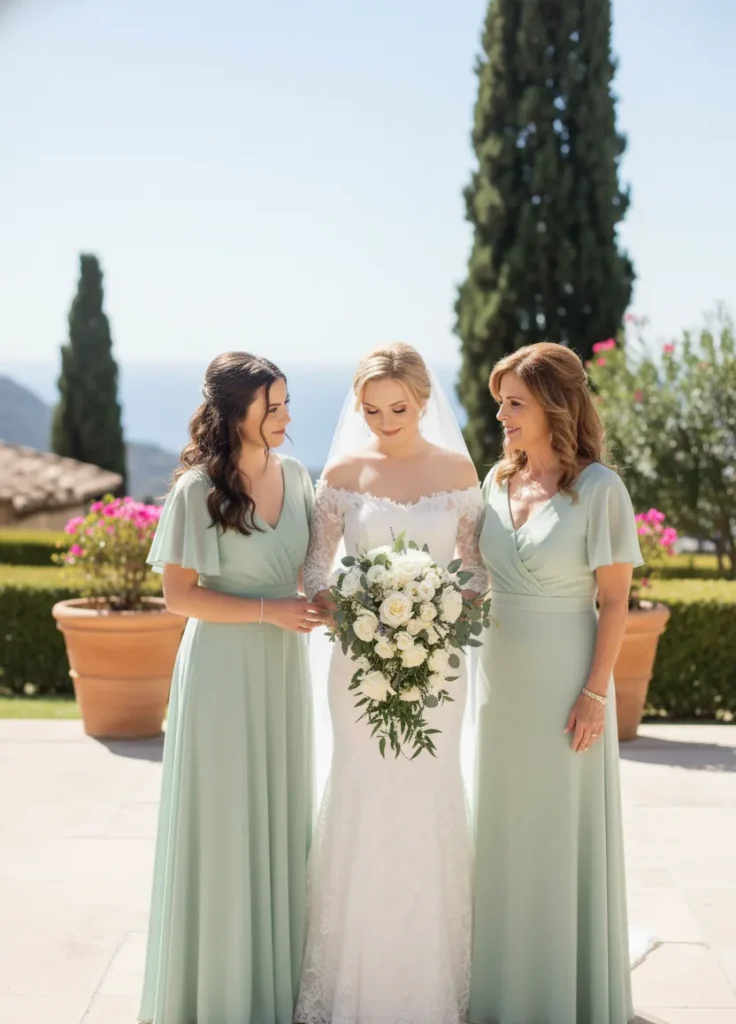
I do the hair for the bride and her group, up to around ten people per wedding, and the makeup team does the same with makeup. It's normal for a group to include very different skin tones. The idea isn't for everyone to wear the same foundation or the same colours, but the same style: equally natural or equally glam, each in the shades that suit her skin.
“Ceci was one of the best choices I made for my wedding. From the very first moment she made me feel so confident and understood exactly what I wanted.”
Silvina Janet Ferreira Emeri · Google review
The makeup trial: where your shade is decided
- Come with a clean face or very little makeup, so your real skin can be seen.
- Bring a photo of your dress: white or ivory changes which shade works best.
- Say whether you plan to tan or use self-tan before the wedding.
- Look at yourself by a window and take a photo with flash: that way you'll see whether your face and neck match.
- If you live abroad, the trial takes place once you arrive in Spain, a few days before the wedding, alongside your hair trial.
Your skin, your hair, one team
My team of makeup artists and I come to your hotel, villa or home in Málaga, Marbella and across the Costa del Sol. Message us with your date, time and number of people.
Frequently asked questions
How do I know if my undertone is cool, warm or neutral?
Combine several clues: whether gold suits you better than silver, whether you tan quickly or burn, and whether bright white drains you. The most reliable test is to put three foundation shades on your jawline next to a window: the one that disappears is yours. The team checks it with you at the makeup trial.
Which foundation should I use if I'm tanned on my wedding day?
One that matches your skin that morning, not the shade from the trial if you were paler then. That's why it's worth telling the team if you plan to sunbathe beforehand. The foundation is adjusted on the day, blending shades if needed, and checked so your face, neck and chest match, especially with sleeveless dresses.
Can I use self-tan before my wedding?
Yes, if you already know how it behaves on you. Try it before your makeup trial so the team sees your real shade, and apply it a few days before the wedding, never the night before or for the first time. A new self-tan can go patchy or mark your dress. Make sure your chest and back are even too.
What makeup suits a bride with very fair skin?
Foundation in your exact shade or a touch warmer, with a satin finish; peach or soft pink blusher; champagne and soft brown eyeshadow, and brown liner for daytime. Use bronzer sparingly, as it looks muddy on fair skin. Most importantly, avoid getting burnt in the days before, because peeling skin can't be hidden.
Why does my face look whiter than my neck in flash photos?
It's usually caused by very white powders or products that reflect the flash, especially under the eyes. It also happens when the foundation is lighter than your neck. To avoid it, tinted powder or a very light hand is used, and it's worth taking a flash photo at your trial to check your face and neck match.
Is the trial makeup the same as on the wedding day?
The style and colours, yes: everything is decided at the trial. What can change is the foundation shade, if your skin is more tanned or a little red on the wedding day. The team adjusts those details that morning so the result is the one you approved, matched to the skin you have on the day.