The best Indian bridal hairstyles for a Hindu wedding are the ones that carry the weight of your jewellery and dupatta for hours without giving you a headache: a low bun with a jasmine gajra, a long embellished braid, a half-up style with volume at the crown, and waves for the sangeet or reception. The secret isn't just the style but the foundation: a clean centre parting for the maang tikka and sindoor, hidden anchors for the dupatta, and a different look for each ceremony.
I'm Ceci Sosa, a bridal hairstylist on the Costa del Sol with more than 7 years of experience, and I come to wherever you're getting ready: hotel, villa or finca, in Marbella, Málaga and the surrounding area. Every family celebrates the rituals in its own way (a Punjabi wedding is nothing like a Gujarati, Bengali or South Indian one), so I always start by asking which ceremonies you're having and what they mean to you. From there, this is how I approach it.
In short:
- One look per ceremony: simple and practical for the haldi and mehndi, full of movement for the sangeet, the most elaborate for the pheras and lighter for the reception.
- Heavy jewellery = a firm base: a hidden anchor braid, crossed pins and evenly distributed weight.
- A clear centre parting: the maang tikka sits there and it's where the sindoor is applied.
- Costa del Sol heat: updos for an outdoor mandap, and fresh flowers added at the very last moment.
- An in-person trial with all your jewellery and dupatta, a few days before the wedding if you live outside Spain.
A hairstyle for every ceremony of a Hindu wedding
A Hindu wedding usually spans several days, and each ceremony has its own outfit, atmosphere and practical demands. Planning your hair ceremony by ceremony is what stops you arriving at the main day with exhausted hair, or the same look in every photo.
Haldi: practical and protected
At the haldi you're covered in turmeric paste, and turmeric stains. An elaborate style makes no sense here: I'd suggest a loose braid or an undone bun with a flower or two, keeping your hair gathered and away from your face. If your hair is blonde, highlighted or very light, tie it up well, as turmeric can leave a yellowish tint. Then wash it afterwards so your hair is clean for what comes next.
Mehndi: hands out of action for hours
During the mehndi you sit for hours while the henna dries on your hands and feet, so you can't touch your hair. You need a style that won't fall into your face: a side braid (many Punjabi brides wear a paranda, the tasselled ornament braided into the hair), waves pinned back, or a half-up style with flowers. No long loose strands that end up stuck to the henna.
Sangeet: made for dancing
The sangeet is music, choreography and lots of movement. This is where you can wear more hair down: glam waves, a voluminous high ponytail or a half-up style. But it has to be set for dancing: I set the waves while warm, and the ponytail goes on a base of pins so it doesn't drop halfway through the night.
The ceremony: mandap, pheras and sindoor
This is the day of the heaviest jewellery and the dupatta over your head. The hairstyle has to do three things: hold the dupatta for hours, keep the centre parting clear for the maang tikka and sindoor, and get through the circles around the sacred fire without anything shifting. That's why for this moment I almost always suggest a low bun, with or without a gajra, or a long, firmly anchored braid.
Reception: the change of look
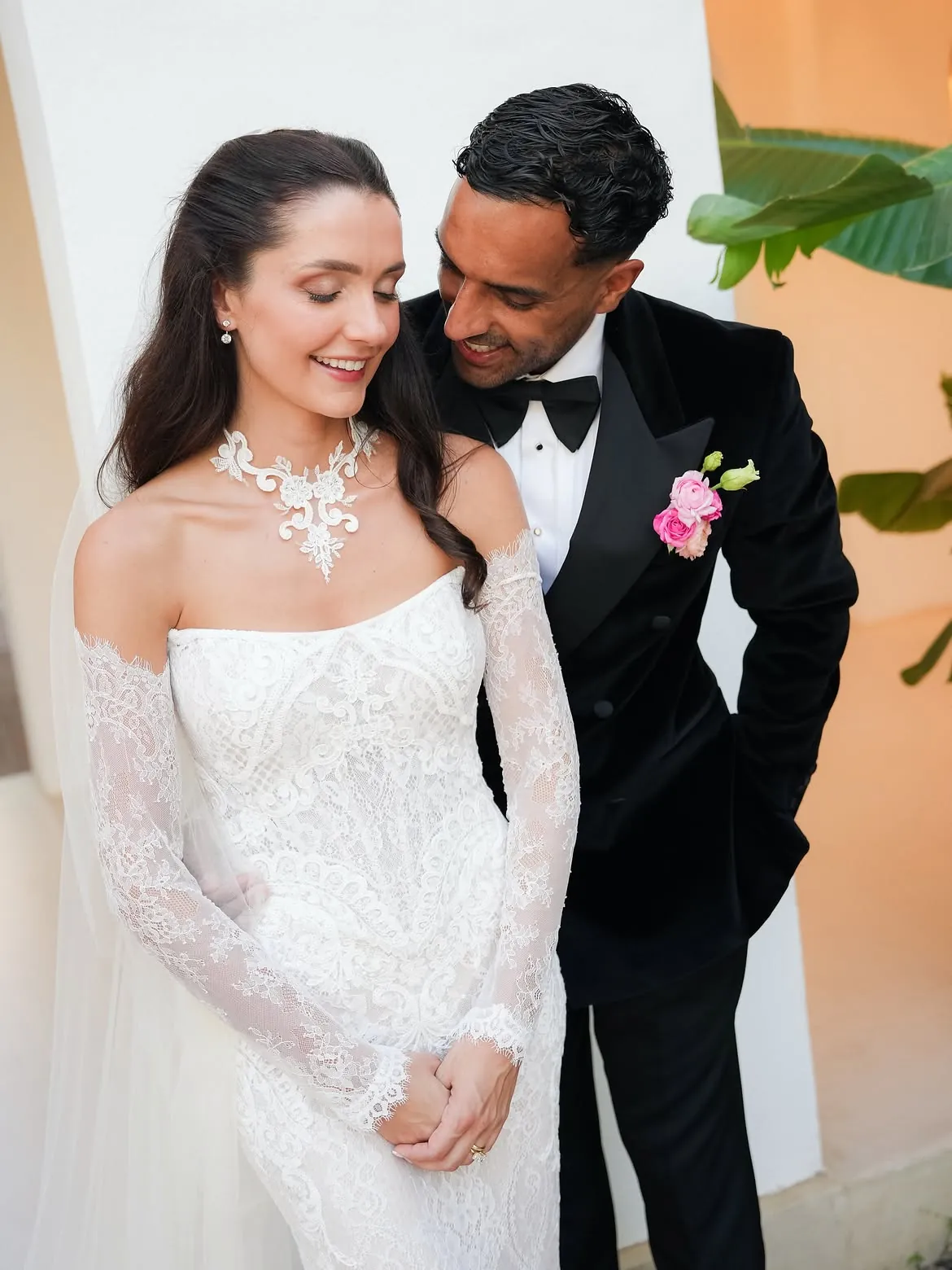
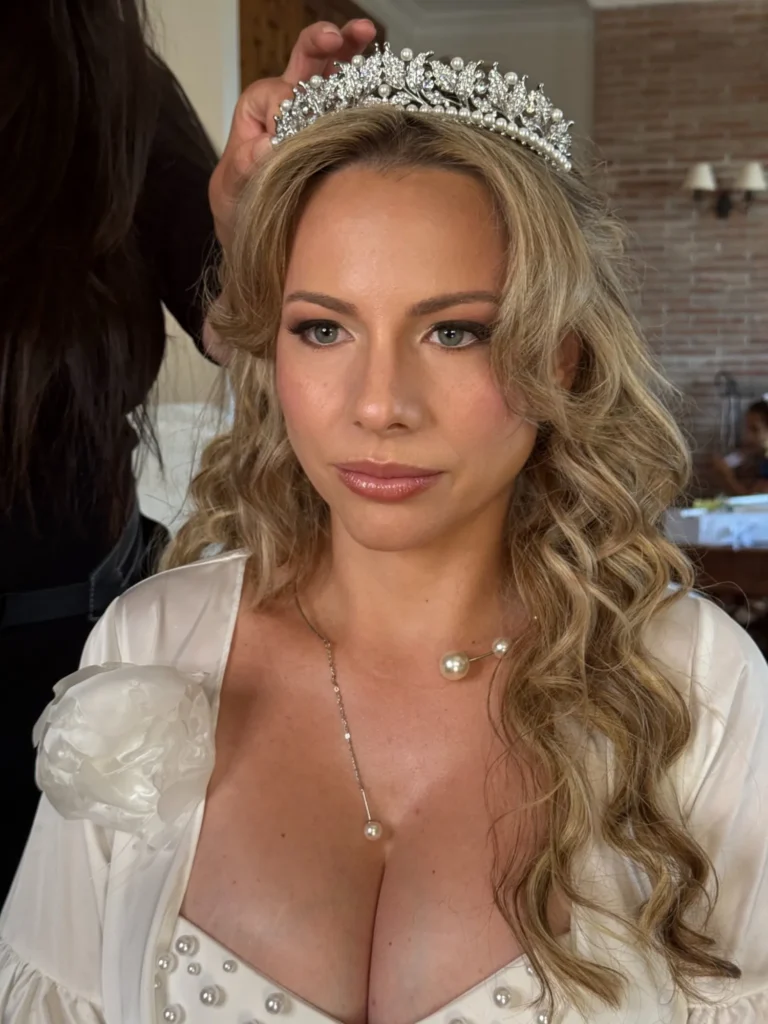
For the reception many brides change outfits and want something lighter: letting the bun down into waves, switching to a half-up style or a sleeker updo with less jewellery. I offer a change of look between the ceremony and the party, as I did for Yami at her wedding in Málaga, where we went from a soft, textured style to a glam one for dancing.
| Ceremony | Style I recommend | Why |
|---|---|---|
| Haldi | Loose braid or undone bun with flowers | Protects hair from turmeric |
| Mehndi | Side braid, with a paranda if you like | You can't use your hands for hours |
| Sangeet | Glam waves, high ponytail or half-up | Movement and dancing |
| Ceremony (pheras) | Low bun with gajra or anchored braid | Holds the dupatta and heavy jewellery |
| Reception | Loose waves or a sleek updo | Lighter and more comfortable for the party |
Indian bridal hairstyle ideas
These are the styles that work best at a Hindu wedding, with what you need to know about each one. For more bridal styles in general, see my wedding hairstyles guide.
1. Low bun with a jasmine gajra or fresh flowers
It's the great classic, and for good reason: a bun at the nape keeps your face clear for the maang tikka or jhoomar, supports the dupatta and can be finished with a jasmine gajra or red roses. Flowers in the hair speak of beauty and prosperity, and the scent of jasmine becomes part of how you remember the day.
My rule in the heat: the gajra goes on last, once everything is set, and the flowers need to arrive fresh and be kept somewhere cool until then. Ask your florist to plan for that.
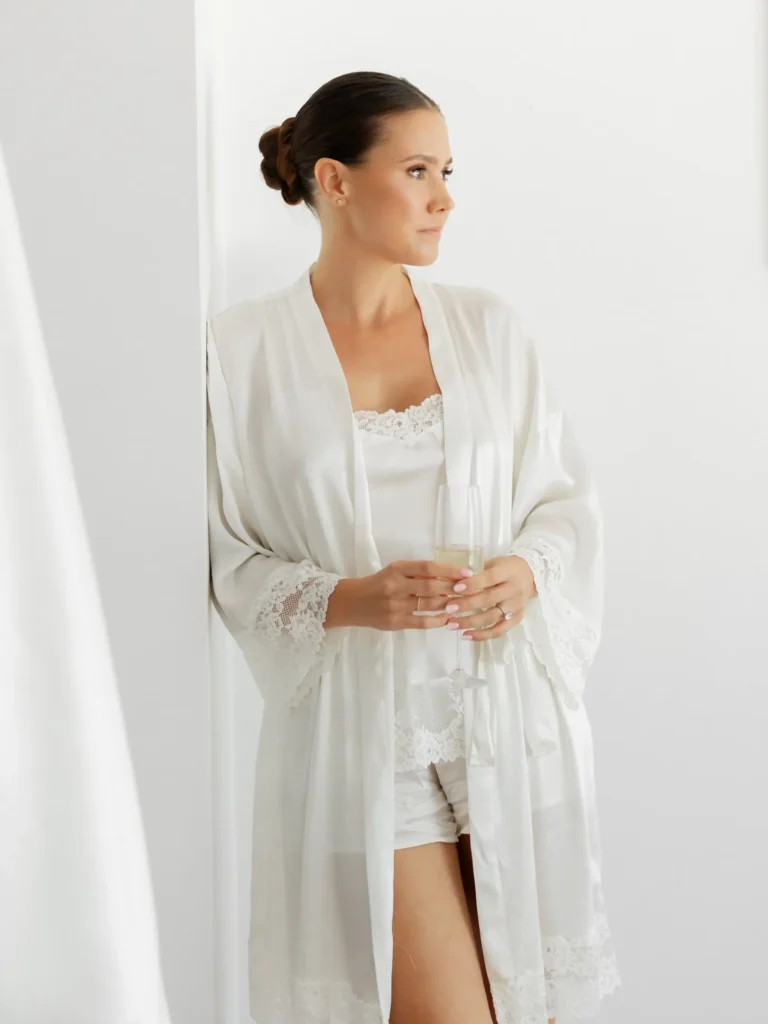
2. Long embellished braid
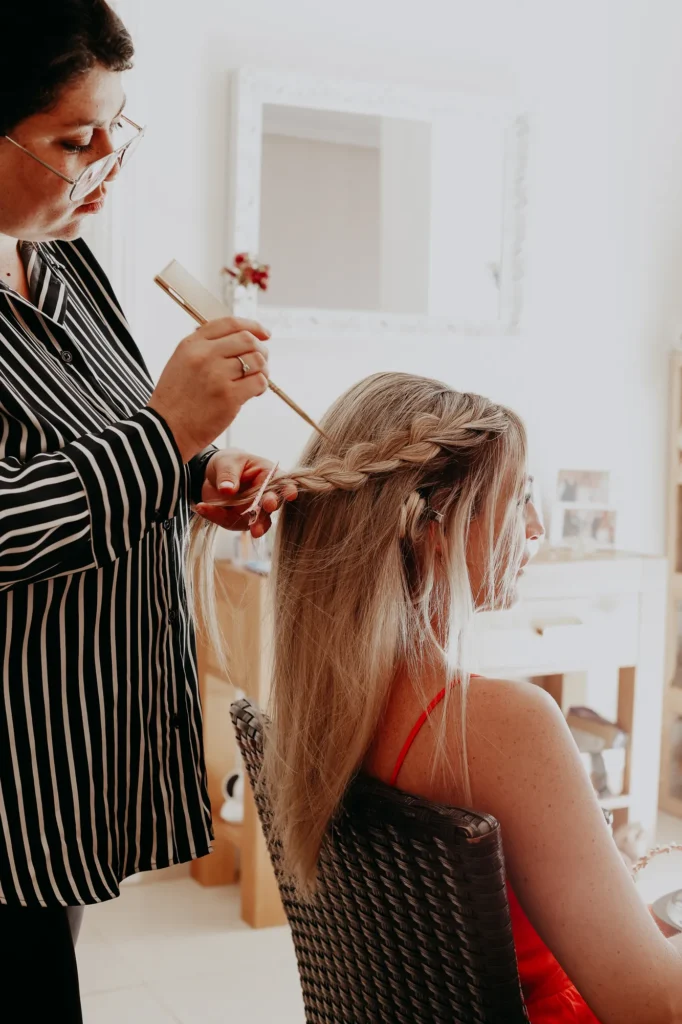
The braid is central to many Hindu weddings, and it can be worn very traditionally (in South India, covered in flowers) or with a more modern feel: a fishtail, a side braid, or a braid with volume at the crown and loose face-framing strands. It's one of the styles that lasts best through a long day. There are more ideas in my post on braided hairstyles.
3. Half-up with volume and floral details
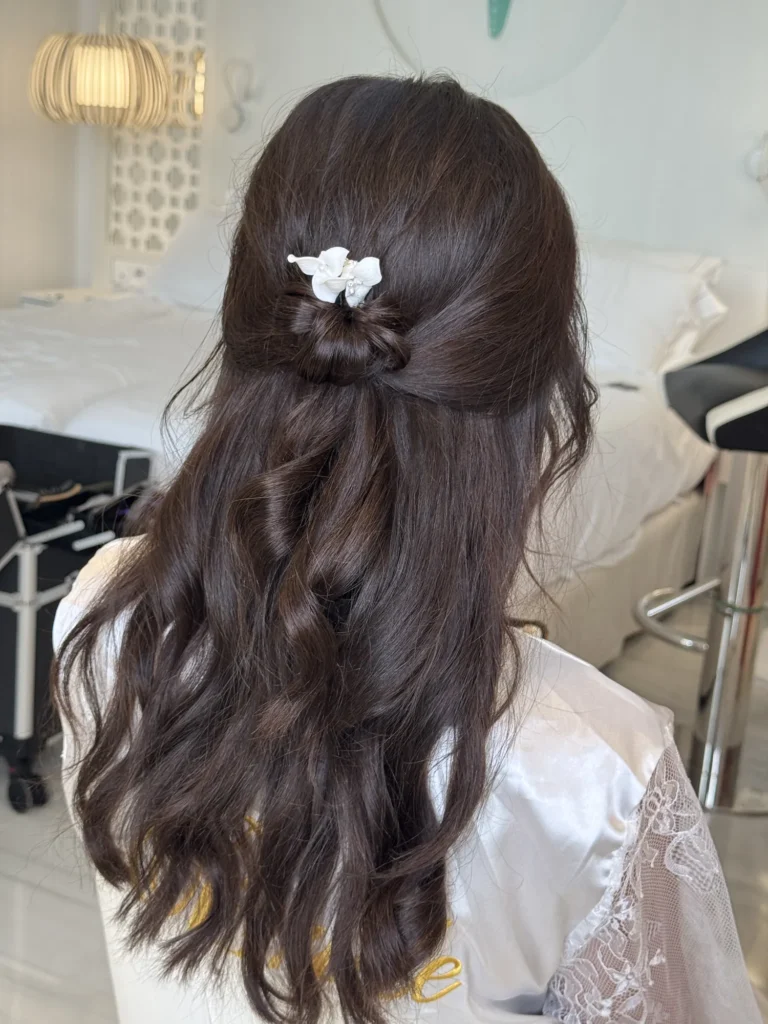
For the sangeet, the reception or a bride who doesn't want all her hair up. I build volume at the crown, gather half the hair into a small bun or braid and leave the rest in waves. It pairs beautifully with a passa, the piece worn on one side of the head, because the inner bun gives it a firm point to hold on to.
4. High princess bun
A high bun shows off your neck, necklaces and statement earrings, and has a truly regal presence. I keep it polished with moderate volume so it holds its shape all day. If your earrings are very heavy and have support chains that clip into the hair, a high bun leaves room to anchor them behind the ear.
5. Loose waves with jewellery and flowers
Loose waves with the maang tikka at the centre look beautiful and very current, especially for the sangeet or reception. For the ceremony with a dupatta they aren't my first choice: the dupatta flattens the waves and has nowhere to attach. If you want them for that moment, I build a hidden base at the back to anchor it.
6. Sleek centre parting with the dupatta
A sleek centre parting is the most classic, minimal style: it hands the spotlight to your jewellery, make-up and the embroidery of the dupatta, which falls over the hair and frames it. It's ideal for formal ceremonies and, in practice, the most comfortable for the sindoor moment.
How your hair holds the weight of jewellery and the dupatta
This is the part you don't see in photos, and it decides whether you're comfortable in hour three or desperate to take everything off. Here's how I work:
- Maang tikka and matha patti: the tikka hook is secured at the parting with a pin hidden under a fine section; the side chains of the matha patti are anchored behind the ears, not just resting there.
- Dupatta: it's pinned to the bun or a hidden anchor braid with crossed pins, never just to loose hair. An embroidered dupatta is heavy, and if it pulls backwards it drags the whole style with it.
- Nath and earrings: if the nath chain or earring supports clip into the hair, I prepare a firm anchor point at ear level.
- Weight distribution: several small anchor points instead of one big one. That's what prevents a headache after several hours.
- Long, thick hair: it holds beautifully but it's heavy and takes longer to curl. I factor that into the schedule.
Ceci’s tip
Bring all your jewellery to the trial, dupatta included. I'll put everything on and leave it on for a good while: if anything pulls or pinches, that's when we find out, not on the wedding day.
Heat, sun and humidity: a Hindu wedding on the Costa del Sol
Many couples who marry here set up the mandap outdoors, in a finca garden or overlooking the sea. It's beautiful, but you need to plan for three things. First, the ceremony time is set by the muhurat, and sometimes it falls at midday with the sun at its highest. Second, the heat under an embroidered dupatta and heavy jewellery. Third, the humidity near the sea, which makes waves frizz.
That's why for the ceremony I insist on updos and braids, which last in the heat until the end, and keep loose hair for the evening when the temperature drops. If you're marrying away from home, my guide to destination weddings in Spain has more planning advice.
How we plan hair across several days
- Send me the programme. On WhatsApp, each ceremony with its date, time, venue and how many people need their hair done. That way I can give you one fixed quote for everything.
- We work backwards from the muhurat. Bridal hair takes one to two hours, longer for very long, thick hair, plus time to place the jewellery and dupatta.
- Your family too. I style the bride and her group (mother, sisters, cousins, bridesmaids), up to around 10 people per wedding, and leave you until last.
- Clean, dry hair. Wash it after the haldi and arrive at each session with clean, dry hair, with your jewellery and accessories to hand.
- Touch-up and photos. I do a touch-up before the ceremony and stay with you until the photo session is over.
If you need make-up, my team of make-up artists works to the same fixed schedule. And to see how to fit all the timings together, there's my guide to planning your wedding-day timeline.

Your trial: with your jewellery and dupatta
The trial is always in person. Bring your jewellery, the dupatta, a photo of each outfit and, if you have them, photos of styles you like. If you live outside Spain, we do it once you arrive, a few days before the wedding. At the trial we decide on the main ceremony style and agree on the looks for the other days.
“Had the most perfect hair for me and my bridal party. […] She is a really sweet woman, and very hard working.”
Gemma Ferguson · Google review
If your wedding brings cultures together, you may also like what I've written on Jewish wedding hairstyles, with the veil and the hora dance.
Celebrating your Hindu wedding in Marbella or Málaga?
Send me your ceremony programme and how many people need their hair done. I'll reply myself, the same person who will do your hair.
If the wedding is in the city or elsewhere in the province, see my bridal hair service in Málaga.
Frequently asked questions
Which hairstyle works best with a maang tikka?
Any style with a clean centre parting: a low bun, long braid, half-up style or loose waves. The tikka is secured at the parting with a pin hidden under a fine section so it doesn't slide as you move. If you're also wearing a matha patti, I anchor its chains behind your ears. We always test it with your own piece at the trial.
How do you pin a dupatta so it doesn't slip?
To the bun or to a hidden anchor braid at the back, with crossed pins, never just to loose hair. That way the weight of the embroidery doesn't pull the style backwards. If the dupatta is very heavy, I spread the hold across several small points. That's why it's worth bringing it to the trial and wearing it for a good while.
How many hairstyles does a bride need for a Hindu wedding?
It depends how many ceremonies you're having. Typically you'd plan a look for the haldi, another for the mehndi, one for the sangeet, the main one for the ceremony and, if you like, a change for the reception. Not all need to be elaborate: the haldi look should be practical. Send me your programme and I'll suggest a full plan.
Do fresh flowers and a gajra last in the Marbella heat?
They do, if you look after them. The gajra should arrive fresh, be kept somewhere cool and go on last, once the style is set. Jasmine suffers in the midday sun, so for an outdoor ceremony ask your florist to prepare it as late as possible. On very hot days, preserved flowers are another option.
What hairstyle should I wear for the haldi and mehndi?
For the haldi, a loose braid or undone bun that keeps your hair gathered, because turmeric stains, especially light hair. For the mehndi, a style that won't fall into your face while the henna dries: a side braid, with a paranda if you like, waves pinned back, or a half-up style with flowers.
When do I have my hair trial if I live outside Spain?
Once you arrive in Spain, a few days before the first ceremony. The trial is always in person: I need to see your hair with the jewellery and dupatta on to check the weight and comfort. We book the trial date together with the wedding dates so it fits around your arrival.
How far ahead should I book for a multi-day wedding?
I'd recommend booking 2 to 6 months ahead, and the earlier the better for several days in high season. Message me on WhatsApp with your programme; I'll send a fixed quote, and the dates are secured with a deposit that is deducted from the total.